What Helps You Transform Asset Operations
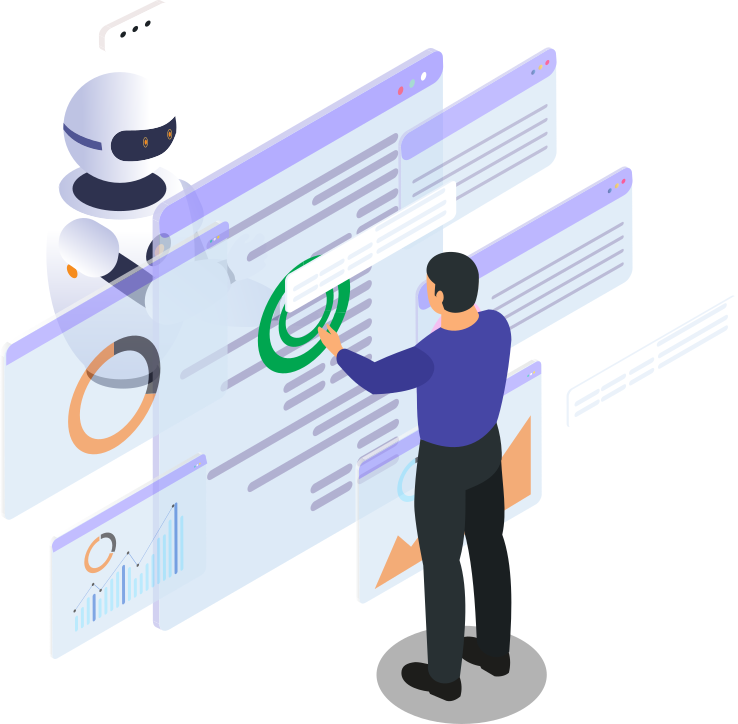
Connect asset records, telemetry, maintenance history, ownership, lifecycle, location and operational data to create a continuously evolving view of every enterprise asset
Correlate signals across enterprise systems to identify asset health issues, maintenance requirements, configuration drift, lifecycle events and operational exceptions
Deploy context-aware agents for asset intelligence, reconciliation, maintenance, firmware, compliance, lifecycle, reliability and work-order operations
Apply enterprise policies, permissions and human approvals before execution, then verify that every approved action delivers the expected operational state
Business Outcomes
Faster Operational Decisions
Turn fragmented asset signals into contextual intelligence so teams can understand what changed, why it matters and what should happen next
Higher Asset Reliability
Connect telemetry, maintenance history, lifecycle state and operational dependencies to identify risks earlier and improve asset availability
Reduced Manual Operations
Coordinate reconciliation, maintenance, patching, lifecycle and work-order activities with AI agents instead of relying on repetitive manual workflows
Controlled Enterprise Automation
Automate approved asset operations while preserving identity, permissions, human approvals, auditability and policy-defined execution boundaries
Top Features and Pillars

Unified Asset Context
Create a continuously updated understanding of asset identity, state, relationships, ownership, lifecycle, operational history and dependencies

Specialized AI Agents
Deploy agents for asset intelligence, reconciliation, maintenance, firmware, compliance, lifecycle, reliability, work orders and verification

Governed Execution
Control what agents can do through authentication, permissions, policy checks, approval workflows and restricted execution boundaries

Verified Outcomes
Confirm the real operational state after execution instead of treating a successful workflow or API response as completion
Solutions Provided

Lifecycle Operations
Hardware AssetOps
Manage ownership, health, connectivity, lifecycle, warranty, configuration, patching, custody, RMA and remote hardware operations with continuous asset context
Discover More


Reliability Operations
Manufacturing AssetOps
Connect machines, equipment, telemetry, maintenance, production context, calibration, firmware and spare-parts data for reliability-driven operations
Discover More

Industry Overview
Healthcare
Manufacturing
Automotive
Consumer Electronics
Retail

Real-Time Diagnostics
Process medical data instantly on devices like portable scanners or wearables to reduce latency in diagnosis
Privacy-Preserving Monitoring
Keep sensitive patient data on-device for vitals tracking, reducing cloud exposure and supporting HIPAA compliance
Smart Wearables
Enable continuous health tracking with AI-powered watches and patches for ECG, sleep, or glucose levels

Emergency Alerts & Fall Detection
Trigger instant responses using local processing when patients experience critical health events

Machine Health Monitoring
Use embedded sensors and on-device AI to predict equipment failures without relying on cloud servers
Vision-Based Defect Detection
Run lightweight AI models on cameras to detect production defects in real time at the device level
Energy Optimization Controllers
Enable smart local control of power usage across machinery based on contextual insights

Worker Safety Sensors
Detect proximity risks, fatigue, or PPE violations on wearable or embedded factory sensors

Driver Assistance Systems (ADAS)
Process visual and sensor data locally for lane detection, collision warnings, and blind spot alerts
In-Vehicle Personalization
Enable voice assistants and cabin environment adjustments using on-board AI models
Predictive Maintenance Alerts
Monitor vehicle performance and trigger service alerts directly from embedded processors
Navigation & Route Optimization
Provide real-time navigation using locally processed traffic and terrain data for offline reliability

Voice Assistants & Speech Recognition
Run voice models locally for fast response and offline functionality in smart home devices
Face & Gesture Unlocking
Enable secure, fast device access using on-device biometric processing
Personalized Recommendations
Generate local content suggestions on phones or TVs based on behavior without cloud tracking
Camera Enhancements
Apply filters, scene detection, and stabilization in real time using on-device vision AI

Smart Kiosks
Use on-device AI for product scanning, checkout, or customer support without internet dependency
Digital Signage Intelligence
Run local models to detect audience demographics and tailor content dynamically
In-Store Navigation Assistants
Guide customers using mobile or handheld AI assistants with localized map understanding

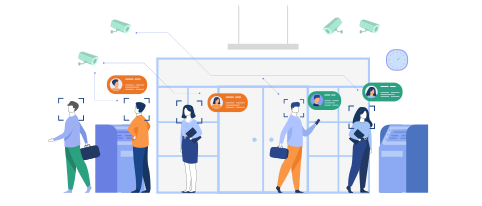
Loss Prevention Cameras
Analyze behavior directly on security devices to detect suspicious actions instantly

Trusted by leading companies and Partners



.svg)