
Logistics AI Conferences 2027: Verified Dates
Logistics and supply chain AI conferences for 2026–2027 with dates verified on official sites: Gartner, AWS re:Invent and Automate, plus a ...
Manufacturing AI Conferences 2027: Verified List
Manufacturing AI conferences for 2026–2027 with dates verified on official sites: Automate, NVIDIA GTC, AWS re:Invent and Gartner, plus a pilot-first ...
Robotics Conferences 2027: Verified Dates and Picks
Robotics conferences for 2026–2027 with dates verified on official sites: Automate, NVIDIA GTC and AWS re:Invent, plus how to turn an event into a ...
Predictive AI in Supply Chain: 2026 Guide
Predictive AI in supply chain for 2026: demand, supply and disruption forecasting, AI planning agents, a reference architecture, ROI logic and a ...
Featured Voice


Featured Series
LLMOps
Highly perceptive, accurate, and interactive visual AI agents to make better decisions using richer insights generated

Logistics AI Conferences 2027: Verified Dates
Logistics and supply chain AI conferences for 2026–2027 with dates verified on official sites: Gartner, AWS re:Invent and Automate, plus a ...
Manufacturing AI Conferences 2027: Verified List
Manufacturing AI conferences for 2026–2027 with dates verified on official sites: Automate, NVIDIA GTC, AWS re:Invent and Gartner, plus a pilot-first ...
Robotics Conferences 2027: Verified Dates and Picks
Robotics conferences for 2026–2027 with dates verified on official sites: Automate, NVIDIA GTC and AWS re:Invent, plus how to turn an event into a ...
Predictive AI in Supply Chain: 2026 Guide
Predictive AI in supply chain for 2026: demand, supply and disruption forecasting, AI planning agents, a reference architecture, ROI logic and a ...
GPU Data Visualization in 2026: Tools and Architecture
GPU data visualization in 2026: how RAPIDS, deck.gl, Datashader and Omniverse render billions of points, a reference architecture and a 30-day plan.
Model Explainability in 2026: Methods and Tools
Model explainability in 2026: SHAP, LIME, counterfactuals and interpretability tools, EU AI Act deadlines, an explainability architecture and a ...
Neural Architecture Search (NAS): 2026 Guide
Neural architecture search in 2026: how NAS finds faster, smaller models, hardware-aware NAS for edge and LLMs, tools, costs and a 30-day pilot plan.
Model Collapse in AI: 2026 Guide to Prevention
Model collapse in 2026: why AI trained on AI-generated data degrades, early warning signs, the research on prevention and a 30-day data provenance ...
Latent Variable Models in 2026: A Practical Guide
Latent variable models in 2026: VAEs, latent diffusion, world models and JEPA explained, with enterprise uses, a reference architecture and a 30-day ...
LLMs and Knowledge Graphs: 2026 Enterprise Guide
LLMs and knowledge graphs in 2026: how LLMs build graphs, how GraphRAG grounds answers, agent memory, architecture, cost trade-offs and a 30-day plan.
Image Synthesis Models in 2026: How They Work
Image synthesis models in 2026: how GANs, diffusion, DiT and flow models create images, leading models compared, agentic image workflows and ...
Generative AI for Smart Cities: 2026 Guide
Generative AI for smart cities in 2026: traffic, public safety and citizen-service use cases, a privacy-first architecture, EU AI Act rules and a ...
AI Video Investigations in 2026: A Practical Guide
AI video investigations: why manual CCTV review fails, how natural-language video search and VLM agents speed up cases, privacy rules and a 30-day ...
AI Image Restoration in 2026: Models and Uses
AI image restoration in 2026: how GAN, transformer and diffusion models denoise, deblur and upscale images, enterprise uses, fidelity risks and a ...
Generative AI in Supply Chain: 2026 Use Cases
Generative AI in supply chain in 2026: use cases for planning, suppliers and logistics, how agents work with optimizers, risks and a 30-day pilot ...
Smart Irrigation with IoT and ML: 2026 Guide
Smart irrigation with IoT and machine learning in 2026: soil sensors, evapotranspiration models, edge control, architecture, ROI logic and a 30-day ...
3D Vision and Depth Estimation: 2026 Guide
3D vision and depth estimation in 2026: lidar vs stereo vs monocular depth AI, Depth Anything V2, Depth Pro, VGGT, industrial uses and a 30-day pilot ...
Autonomous Retail Operations: 2026 Guide for Stores
Autonomous retail operations in 2026: how vision AI, edge computing and AI agents run shelves, checkout, loss prevention and replenishment, plus a ...
IoT Trends 2026: 10 Shifts Leaders Must Plan For
IoT trends for 2026: edge AI, agents on device data, Matter, the EU Cyber Resilience Act, digital twins and physical AI, with what each means for ...
Smart City Computer Vision in 2026: Privacy First
Smart city computer vision in 2026: traffic, safety and asset use cases, privacy-by-design edge architecture, EU AI Act and GDPR rules, and a 30-day ...
Responsible AI in Manufacturing: 2026 Guide
Responsible AI in manufacturing for 2026: EU AI Act dates, safety, worker monitoring, explainability, a governance lifecycle and a 30-day plan for ...
Edge AI vs Federated Learning: 2026 Comparison
Edge AI vs federated learning: what each does, key differences, when to combine them, privacy and cost trade-offs, and a 30-day plan to start.
Energy-Efficient Computer Vision Models: 2026 Guide
Energy-efficient computer vision models in 2026: efficient architectures, quantization, pruning, distillation, edge hardware per watt and a 30-day ...
Edge Computing for Autonomous Security in 2026
Edge computing for autonomous security in 2026: how edge AI detects and responds to physical and IoT threats on-site, zero trust design and a 30-day ...
LLMs in Manufacturing: 2026 Use Cases and Pilot Plan
LLMs in manufacturing in 2026: use cases that pay back, a private plant architecture, risks and a 30-day pilot plan for maintenance, quality and ...
Enterprise Agentic AI in 2026: Pilot to Production
Enterprise agentic AI in 2026: how to move AI agents from pilot to production with the right operating model, platform, governance, ROI case and ...
How to Choose an IoT Platform in 2026
How to choose an IoT platform in 2026: device management, OTA updates, edge runtime, security and Cyber Resilience Act needs, AWS vs Azure vs open ...
Edge AI in Healthcare: 2026 Uses, Risks and Rules
Edge AI in healthcare in 2026: where on-device AI helps imaging, monitoring and hospital operations, the FDA and EU AI Act rules, and a safe 30-day ...
Robotics Technology in 2026: How Modern Robots Work
Robotics technology in 2026: how modern robots sense, think and act, the main robot types, the AI stack behind them, market data and how to start a ...
Multimodal AI Agents in 2026: Architecture and Uses
Multimodal AI agents in 2026: how agents that see, hear and read work, VLM-based architecture, business use cases, cost and privacy, and a 30-day ...
Edge AI Companies in 2026: Who Does What
Edge AI companies in 2026 grouped by type: chipmakers, cloud edge services, dev platforms, integrators and edge AI ops platforms, plus how to pick ...
Edge AI in Agriculture: 2026 Guide to Smarter Farms
Edge AI in agriculture in 2026: how on-farm AI runs crop, irrigation, weed and livestock decisions without the cloud, plus architecture and a 30-day ...
Multi-Cloud ModelOps: 2026 Architecture Guide
Multi-cloud ModelOps in 2026: run, govern and monitor ML, LLM and agent models across AWS, Azure, Google Cloud and on-prem with one control plane.
Multi-Agent Systems on AWS: 2026 Architecture Guide
Multi-agent systems on AWS: Bedrock AgentCore and Strands Agents, orchestration patterns, a reference architecture, cost, security and a 30-day plan.
Deploying Microservices at the Edge: 2026 Guide
Edge microservices deployment in 2026: K3s, KubeEdge, AKS Edge Essentials and EKS Hybrid Nodes compared, GitOps rollout patterns and a 30-day plan.
Semantic Kernel Agentic Workflows: 2026 Guide
Semantic Kernel agentic workflows: how Microsoft Agent Framework succeeds Semantic Kernel, migration steps, Azure workflow patterns and a 30-day plan.
Video Alert Fatigue: How to Cut False Alarms in 2026
Video alert fatigue in 2026: why camera false alarms bury real threats, how AI verification and video agents cut the noise, and a 30-day plan to fix ...
Edge Computing and 5G in 2026: Enterprise Guide
Edge computing and 5G in 2026: how 5G edge works, private vs public 5G, network slicing, AI-RAN, use cases, costs and a 30-day plan for enterprise ...
Agentic Workflows in 2026: Patterns and Examples
Agentic workflows in 2026: what they are, how they differ from RPA and free agents, five orchestration patterns, real examples and a 30-day rollout ...
The Agentic Reasoning Loop Explained: 2026 Guide
The agentic reasoning loop explained for 2026: how AI agents plan, act, observe and reflect, ReAct and loop patterns, stop rules, cost limits and a ...
What Is Agentic AI? The 2026 Guide for Enterprises
What is agentic AI in 2026? A plain-English definition, how it differs from generative AI and AI agents, the architecture, risks and a 30-day start ...
Data-Centric vs Model-Centric AI: 2026 Guide
Data-centric vs model-centric AI in 2026: the real difference, when each wins, a comparison table, the data-centric workflow and a 30-day data ...
Machine Learning Model Visualization: 2026 Guide
Machine learning model visualization in 2026: architecture, training, explainability and production views, the best tools compared and how to use ...
Proactive Safety with Vision AI in 2026: A Guide
Proactive safety with vision AI in 2026: why reactive safety programs fail, how cameras spot hazards before injuries, privacy rules and a 30-day ...
What Is a Convolutional Neural Network? 2026 Guide
What is a convolutional neural network in 2026? How CNN layers work, CNN vs vision transformers, real business uses, edge deployment and how to ...
What Is Agentic Video Intelligence? 2026 Guide
What is agentic video intelligence? How video AI agents use VLMs to see, reason and act on live video, how it beats classic analytics, and how to ...
AI in Food Manufacturing: 2026 Use Cases and ROI
AI in food manufacturing in 2026: vision inspection, foreign-material detection, predictive maintenance, traceability, ROI logic and a 30-day plant ...
Embodied AI Agents in 2026: How Robots Learn to Act
Embodied AI agents in 2026: how VLA models, world models and simulation help robots perceive, reason and act, plus architecture and a 30-day pilot ...
Cloud vs Edge for Vision AI Workloads in 2026
Cloud vs edge for vision AI workloads in 2026: a decision framework on latency, cost, privacy and connectivity, a hybrid architecture and a 30-day ...
AutoML Challenges in 2026 and How to Solve Them
AutoML challenges in 2026: data prep, leakage, explainability, cost and deployment gaps, how AutoML tools compare, and how to get models to ...
FinOps for AI Infrastructure: 2026 Cost Control Guide
FinOps for AI infrastructure in 2026: control GPU, token and inference costs with unit economics, PTUs vs pay-as-you-go, showback and a 30-day plan.
Edge AI Computer Vision in 2026: Platforms and Stack
Edge AI computer vision in 2026: the five-layer stack from cameras to fleet management, what replaced Azure Percept and AWS Panorama, and a 30-day ...
Generative AI Use Cases in 2026: 12 That Pay Back
Generative AI use cases in 2026: 12 enterprise applications that pay back, how to rank them by value and risk, a reference architecture and a 30-day ...
Enterprise ML Platform in 2026: How to Choose One
Enterprise ML platform guide 2026: must-have capabilities, SageMaker vs Azure ML vs NVIDIA vs private stacks, reference architecture and a 30-day ...
Edge AI Video Surveillance in 2026: Architecture Guide
Edge AI video surveillance in 2026: smart camera vs edge server vs cloud, reference architecture, sizing questions, privacy rules and a 30-day pilot ...
Real-Time Anomaly Detection: 2026 Architecture Guide
Real-time anomaly detection in 2026: streaming architecture, edge vs cloud scoring, latency budgets, tools after Azure Anomaly Detector, and a 30-day ...
AI in Precision Automotive Manufacturing: 2026 Guide
AI in precision automotive manufacturing in 2026: edge vision inspection, tool-wear prediction, digital twins, ROI logic and a 30-day pilot for parts ...
Edge AI Applications in 2026: Use Cases and Security
Edge AI applications in 2026 by industry, from factories to hospitals, plus how to secure edge AI devices, models and data and a 30-day start plan.
Deep Learning Anomaly Detection: 2026 Methods Guide
Deep learning anomaly detection in 2026: autoencoder, forecasting, graph and transformer methods compared, when to use each, and a 30-day pilot plan.
Agentic AI in Manufacturing: 2026 Plant Playbook
Agentic AI in manufacturing in 2026: plant use cases, reference architecture, ROI logic, risks and a 30-day pilot plan for maintenance, quality and ...
Agentic AI at the Edge in 2026: Architecture and Uses
Agentic AI at the edge in 2026: how AI agents run on local hardware next to machines and cameras, reference architecture, risks, costs and a 30-day ...
Model Deployment Testing 2026: Shadow, Canary, A/B
Model deployment testing in 2026: shadow, canary, blue/green and A/B rollouts for ML and LLM models, rollback rules, cloud options and a 30-day plan.
Reasoning Loop Observability for AI Agents in 2026
Reasoning loop observability in 2026: how to trace every plan, tool call and decision an AI agent makes, what to measure, and a 30-day rollout plan.
ModelOps Monitoring KPIs: The 2026 Scorecard
ModelOps monitoring KPIs for 2026: drift, quality, latency, cost and governance metrics for ML, LLM and agent models, with a scorecard and 30-day ...
What Is ModelOps? Enterprise Guide for 2026
What is ModelOps in 2026? How it governs every AI model in production, ModelOps vs MLOps, the lifecycle, EU AI Act timing and a 30-day plan.
Model Robustness in 2026: How to Build and Test It
Model robustness in 2026: what makes a robust model, how to test for noise, data shift and adversarial attacks, and how to keep ML and LLM models ...
Azure Vision for Retail and Logistics in 2026: Guide
Azure Vision for retail and logistics in 2026: Image Analysis and Custom Vision retirements, replacements, and vision AI for Azure supply chain ...
Model Validation in 2026: Techniques and Workflow
Model validation in 2026: techniques, metrics and a validation workflow for ML, LLM and agent models, plus regulatory expectations and a 30-day plan.
Multi-Access Edge Computing (MEC) in 2026: A Guide
Multi-access edge computing (MEC) in 2026: how telco edge works, ETSI MEC standards, AWS Wavelength, private 5G vs on-prem edge, AI use cases and how ...
Azure Machine Learning in 2026: Features and Collaboration
Azure Machine Learning in 2026: services, how collaboration works through workspaces and registries, SDK v1 and prompt flow retirements, and MLOps ...
What Is Edge Computing? The 2026 Guide for Enterprises
What is edge computing in 2026? How it works, edge vs cloud, the layers of an edge architecture, IoT edge solutions, edge AI, costs and how to start.
AWS Panorama End of Support: 2026 Migration Guide
AWS Panorama reached end of support on 31 May 2026. What it did, why devices stopped working, and how to migrate edge computer vision to Jetson and ...
Agentic AI Retail Recommendations: Amazon-Style in 2026
How the Amazon recommendation system works and how retailers build agentic AI recommendations in 2026: architecture, AWS options, risks and a 30-day ...
AWS IoT Greengrass Edge AI in 2026: V2, Neo and Migration
AWS IoT Greengrass for edge AI in 2026: V1 end of support, Greengrass V2 and nucleus lite, SageMaker Neo, Edge Manager replacements and a migration ...
Augmented AI vs Machine Learning: 2026 Guide
Augmented AI in 2026: how human-in-the-loop AI differs from full automation, what replaces Amazon A2I, and how to design human review for AI agents.
AI Video Surveillance in 2026: Safe, Private, Compliant
AI video surveillance in 2026: how AI cameras and video agents improve security and safety, workplace privacy rules, edge architecture and how to ...
Edge and Hybrid Computing 2026: Examples and Architecture
Edge and hybrid computing in 2026: hybrid cloud computing examples, edge-to-cloud AI architecture, Azure Local, AWS and Google options, and a 30-day ...
NLP Tools in 2026: Libraries, APIs and LLM Platforms
NLP tools in 2026: open-source libraries, cloud NLP APIs and LLM platforms compared, and how to pick the right natural language processing software.
What Is a Foundation Model? Enterprise Guide 2026
What is a foundation model in 2026? Definition, types (LLM, vision, world models), build vs adapt choices, costs and how to run them privately at the ...
Image and Video Analytics on Databricks: 2026 Guide
Databricks computer vision in 2026: store, label, train and serve image and video analytics with Unity Catalog, ai_query and edge inference.
Speech Recognition in 2026: How Enterprise ASR Works
Speech recognition in 2026: how modern ASR works, cloud vs open models like Whisper and Parakeet, accuracy and privacy trade-offs, and private ...
Generative AI Tools in 2026: An Enterprise Buyer's Guide
Generative AI tools in 2026: the main categories, how enterprises compare assistants, platforms and open models, private deployment and a 30-day plan.
Agentic Intelligent Automation in 2026: 10 Examples
Intelligent process automation examples for 2026: how agentic AI extends RPA and IPA, 10 real use cases, architecture, risks and a 30-day start plan.
Deep Learning vs Neural Networks: 2026 Explainer
Deep learning vs neural networks in 2026: the real difference, how both relate to machine learning, a comparison table and how to pick for your use ...
Autonomous Operations in 2026: From Automation to Agents
Autonomous operations in 2026: how AI agents move IT, plant and network operations from automation to self-healing, with architecture, KPIs and a ...
CI/CD for Machine Learning in 2026: Pipeline Guide
CI/CD for machine learning in 2026: how continuous integration, delivery and training work for ML, LLM and agent pipelines, tools and a 30-day plan.
Large-Scale Image Datasets on Databricks in 2026
Large-scale image datasets on Databricks in 2026: store images in Unity Catalog volumes, curate with Spark, stream to GPUs and deploy vision models ...
AI in Renewable Energy 2026: Forecasting, Grid and O&M
AI in renewable energy in 2026: solar and wind forecasting, grid optimisation, predictive maintenance, edge AI architecture and a 30-day plan.
Real-Time Video Streaming with Edge AI: 2026 Guide
Real-time video streaming in 2026: WebRTC, MoQ and edge AI pipelines that turn live camera feeds into decisions in under a second, plus a 30-day plan.
AI in Telecommunications 2026: Agentic AI Use Cases
AI in telecommunications in 2026: agentic AI use cases for networks, RAN, care and fraud, Level 4 autonomous networks, architecture and where to ...
IoT Development Companies in 2026: How to Choose One
IoT development companies in 2026: the types of partners, IoT analytics companies vs builders, CRA security rules, edge AI and how to choose the ...
ML Model Testing in 2026: Train, Test and Evaluate
ML model testing in 2026: training vs testing data, data and behavioural tests, LLM and agent evaluation, tools and a release workflow.
Automotive Supply Chain AI: Optimization Guide for 2026
Automotive supply chain optimization with AI in 2026: chip and rare earth shocks, battery passports, digital twins, AI agents and a 90-day plan.
Machine Learning Pipeline in 2026: Stages and Tools
Machine learning pipeline guide for 2026: stages, architecture patterns, orchestrators and best practices for ML, LLM and agent workloads.
Synthetic Data Generation with Generative AI in 2026
Synthetic data generation with generative AI in 2026: methods, world models, enterprise use cases, privacy risks and how to validate synthetic data.
Sentiment Analysis with NLP in 2026: Methods and Tools
Sentiment analysis with NLP in 2026: types, how it works, lexicon vs transformer vs LLM approaches, tools and a step-by-step pipeline.
Graph Neural Network Applications: 8 Real Uses in 2026
Applications of graph neural networks in 2026: traffic, chip design, recommendations, drug discovery, supply chain, telecom and cybersecurity, with ...
Real-Time AI Inference in 2026: Applications and Stack
Real-time AI inference in 2026: real-time applications of AI, online vs batch prediction, the streaming and serving stack, and how to design for low ...
AI Agents with Amazon Kendra in 2026: Migration Guide
Amazon Kendra is in maintenance mode in 2026. How AI agents use Kendra, what replaces it (Bedrock Knowledge Base, AgentCore) and how to migrate.
What Is TensorFlow Used For in 2026? An Honest Guide
What is TensorFlow used for in 2026? An honest guide to TensorFlow 2.21, Keras 3, LiteRT and when to choose TensorFlow, PyTorch or JAX.
Visual Dialog Systems in 2026: How Image Chat AI Works
Visual dialog systems in 2026: how image chat AI and vision language models answer multi-turn questions about images and video.
12 NLP Applications and Examples in 2026
12 NLP applications and examples of NLP in 2026, from AI assistants and RAG search to document AI, sentiment and clinical notes, by industry.
Predictive Maintenance Inference: Deploying Models in 2026
Predictive maintenance inference in 2026: how to deploy PdM models at the edge and in the cloud, serve RUL predictions and turn alerts into work ...
What Is an AI Factory? Enterprise Guide for 2026
What an AI factory is in 2026: the GPU, data, software and ops layers that turn data into tokens and decisions, and how enterprises build one ...
NLP vs NLU vs NLG: Key Differences Explained (2026)
NLP vs NLU vs NLG explained for 2026: what each does, how LLMs combine them, a comparison table, examples and how to test each.
AWS Inferentia in 2026: Inf2, Neuron SDK and Inference
AWS Inferentia in 2026: how Inf2 instances serve LLM and multimodal inference, the Neuron SDK and vLLM, and when Trainium or GPUs fit better.
What Is AgentOps? Operating AI Agents in 2026
AgentOps in 2026: how to deploy, observe, evaluate and govern AI agents in production, how it differs from MLOps and LLMOps, and the tools to use.
Visual Anomaly Detection in 2026: Methods and Use Cases
Visual anomaly detection in 2026: how AI spots defects in images, from PatchCore to zero-shot VLMs, plus MVTec AD 2, Anomalib and edge deployment.
Digital Twin in Manufacturing: Industry 4.0 Guide 2026
Industry 4.0 digital twin guide for 2026: how manufacturers use product, process and factory twins, real examples, architecture and how to start.
NLP Techniques in 2026: From Tokens to LLM Agents
Natural language processing techniques in 2026: tokenization, NER, embeddings, transformers, RAG, fine-tuning and evaluation, and when to use each.
GPU Parallel Processing for Computer Vision in 2026
GPU parallel processing for computer vision in 2026: why GPUs win, the NVIDIA stack, edge vs server GPUs, multi-camera sizing and cost tips.
What Is Edge Analytics? 2026 Guide, Tools and Use Cases
Edge analytics explained for 2026: how analysing data at the source works, its types, tools like Greengrass and Azure IoT Operations, and use cases.
Predictive Maintenance ROI: Cutting Downtime in 2026
Build the business case for a predictive maintenance system in 2026: what downtime really costs, how to calculate ROI, and how to run a pilot.
Defect Detection with Deep Learning: 2026 Guide
Defect detection with deep learning in 2026: classification, detection, segmentation and anomaly models, datasets, synthetic data and edge deployment.
AI Agents on Databricks in 2026: Agent Bricks Guide
AI agents on Databricks in 2026: Agent Bricks, Genie, Unity Catalog and AI Gateway, what became of LakehouseIQ, and how to run governed agents.
Real-Time Feature Engineering for ML in 2026: Guide
Real-time feature engineering in 2026: streaming features, feature stores, on-demand transforms and train-serve consistency for fraud, recsys and ...
AI Quality Control in Manufacturing: 2026 Guide
AI quality control in manufacturing for 2026: vision inspection, predictive quality from process data, root-cause agents, and how to start a pilot.
CRNN Model for Text Recognition: 2026 Guide
How the CRNN model recognizes text with CNN, BiLSTM and CTC, how it compares with transformer and VLM OCR in 2026, and when CRNN still fits best.
Federated Learning Applications in 2026: A Practical Guide
Federated learning applications in 2026: how it works, real uses in mobile, healthcare, finance and industry, the main tools, and its privacy limits.
AI Log Analysis with Agentic AI: 2026 Guide
AI log analysis in 2026: how agentic AI reads, correlates and acts on logs, the tools that matter, a reference architecture and safety guardrails.
Vision Inspection on the Assembly Line: 2026 Guide
AI vision inspection on the assembly line in 2026: what it checks, cameras and edge hardware, rule-based vs deep learning, and a 30-day pilot plan.
AI and IoT in Smart Homes: 2026 Guide to What Works
AI and IoT in smart homes in 2026: Matter 1.5, generative voice assistants, local edge AI, energy management and the security rules to plan for.
Generative Adversarial Networks (GANs) in 2026: Guide
Generative adversarial networks explained for 2026: how GANs synthesize images, how they compare with diffusion, and where GANs still win today.
Edge AI for the Smart Factory: 2026 Playbook
Edge AI for the smart factory in 2026: use cases, reference architecture, hardware like Jetson Thor, OT security and a 90-day plan for plant teams.
Enterprise Machine Learning Use Cases in 2026: A Guide
Enterprise machine learning in 2026: the use cases that pay off, why projects stall, and how MLOps, private AI and AI agents change the playbook.
Agentic Process Automation in 2026: Guide and Use Cases
Agentic process automation in 2026: how AI agents extend RPA, which process automation technologies to use, real use cases, risks and governance.
AI Agent Performance KPIs: What to Measure in 2026
AI agent performance KPIs for 2026: reliability, cost per task, autonomy, adoption and business value metrics, with targets and how to track them.
Agent Observability Tools in 2026: Tracing and Evals
Agent observability tools in 2026: tracing, evals and cost tracking with OpenTelemetry, Langfuse and cloud consoles, plus how to choose and run them.
AI Agent Infrastructure Stack: 2026 Guide for Enterprises
The AI agent infrastructure stack in 2026: models, runtimes, MCP and A2A, memory, identity, observability and governance, and how to run it privately.
Graph Neural Networks (GNNs): Guide and Uses in 2026
Graph neural networks in 2026: how GCN, GAT, GraphSAGE and graph transformers work, plus uses in fraud, supply chain, GraphRAG and production tips.
Neural Network Applications by Industry in 2026
Neural network applications in 2026 by industry: vision, speech, forecasting, foundation models, edge inference and physical AI, with sourced ...
Types of Generative AI Models in 2026: A Practical Guide
Types of generative AI models in 2026: LLMs, diffusion, vision-language, world models and small edge models, and how enterprises run them privately.
Distributed Machine Learning in 2026: Training & Inference
Distributed machine learning in 2026: PyTorch FSDP, DeepSpeed, Ray, vLLM and Kubernetes GPU scheduling for private AI training and inference clusters.
ML Platform Tools in 2026: MLOps, LLMOps and AgentOps
Compare machine learning tools and platforms in 2026: MLOps, LLMOps and AgentOps stacks, build vs buy, and how to run them on private infrastructure.
Medical Image Analysis with AI in 2026: A Practical Guide
How AI medical image analysis works in 2026: FDA-listed devices, radiology and pathology foundation models, EU AI Act rules and on-prem deployment.
Inception Model (GoogLeNet) Explained: 2026 Guide
What the Inception model is, how GoogLeNet and Inception-v3 work, what replaced them by 2026, and when Inception-style CNNs still suit edge devices.
Vision Transformers (ViT) in 2026: Guide for Edge AI
How vision transformers work, how they compare with CNNs, and which ViT backbones (DINOv3, SigLIP 2, SAM 3) fit edge devices in 2026.
Computer Vision in Supply Chain: 2026 Use Cases Guide
Where computer vision pays off in supply chains in 2026: warehouse vision, dimensioning, robot picking, yard and dock vision, and inventory drones.
Autonomous Store Technology in 2026: What Actually Works
Amazon is closing its Go and Fresh stores. See which autonomous store tech still works in 2026: smart carts, shelf vision, RFID and AI self-checkout.
Manufacturing Process Automation in 2026: A Practical Guide
How manufacturing process automation works in 2026: PLCs, robots, vision, AI agents, industrial copilots and humanoid pilots, plus how to start.
What Is the Intelligent Edge? 2026 Guide and Use Cases
The intelligent edge explained for 2026: how edge AI works, the 3 Cs, OT vs IT vs IoT edges, hardware, use cases and how to run it at scale.
10 Industrial IoT Applications for 2026 (With Examples)
Ten industrial IoT applications that deliver results in 2026, from predictive maintenance to vision inspection, with examples and how edge AI fits.
12 Edge Computing Applications by Industry (2026)
Real edge computing applications in manufacturing, retail, healthcare, energy, telecom and more, with what runs at the edge and why.
Enterprise Manufacturing Intelligence in 2026: Guide
What enterprise manufacturing intelligence (EMI) is in 2026, how it differs from MES, the data stack behind it, use cases and where AI agents fit.
Serverless vs Edge Computing: Key Differences 2026
Serverless vs edge computing explained: how edge functions like Cloudflare Workers and Lambda@Edge differ, and where AI inference runs.
IoT Analytics Platform 2026: Architecture and How to Choose
What an IoT analytics platform does, the 4-layer architecture, protocols, and how to compare cloud, open-source and industrial options in 2026.
Edge Data Management in 2026: A Practical Guide
How to collect, filter, model and govern data at the edge in 2026: architecture, tools, edge analytics and what to send to the cloud.
Edge vs Fog vs Cloud Computing: 2026 Guide
Edge, fog and cloud computing compared: where data is processed, latency, cost and when to use each layer for AI and IoT workloads.
TinyML and MLOps in 2026: Running AI on Microcontrollers
What TinyML is, what it's used for, which boards and tools to use (LiteRT, Edge Impulse, ESP32), and how to run MLOps for thousands of tiny devices.
Real-Time Video Analytics in 2026: Edge AI and VLMs
Real-time video analytics in 2026: how edge AI and vision language models turn camera feeds into alerts and actions, plus privacy rules to plan for.
MLOps for Edge AI: Tools, Security and Ops in 2026
How MLOps works when models run on edge devices: lifecycle, 7 security layers, MLOps vs ModelOps vs AIOps, and the edge tools that matter in 2026.
Edge Computing Platforms: How to Choose in 2026
What an edge computing platform does, the main types (cloud, Kubernetes, industrial, AI hardware), how they compare, and how to run AI agents at the ...
Robotics and AI in 2026: How Robots Learn and Work
How AI is changing robotics in 2026: robot foundation models, humanoids in factories, edge compute, and what it takes to run AI robots safely.
Top Computer Vision Conferences in 2027: Dates and Locations
CVPR, ICCV and WACV 2027: dates, cities and what each covers, plus what changed for industry teams attending in 2027.
Predictive Maintenance with IoT and AI: 2026 Guide
How IoT sensors, edge AI and maintenance agents predict failures in machines and vehicle fleets: costs, tools, steps and limits in 2026.
Azure AI Vision (Computer Vision API): 2026 Guide
What Azure AI Vision does, which API versions retire in 2026, how to use image analysis and OCR, and how to put vision into production with agents.
Azure Digital Twins in 2026: Guide and Fabric Options
How Azure Digital Twins works in 2026, DTDL, the updated data stack after Time Series Insights, Fabric Digital Twin Builder, and where twins head by ...
Machine Vision Applications and Trends in 2026
How machine vision works in 2026: 12 applications, AI and in-camera inspection, vision-language models, 3D robot guidance, and what changes by 2030.
Computer Vision Applications 2026: Real Examples by Industry
Computer vision applications in manufacturing, retail, security, logistics, energy and healthcare, with what each needs to work and how agents act on ...
What Is Physical AI? AI Agents for the Real World (2026)
Physical AI lets AI agents sense, decide and act on machines, sites and assets. How it works, real use cases, and how to run it safely in production.
Computer Vision Solutions 2026: Use Cases and How to Choose
Computer vision solutions by use case and industry, how to choose between building, buying or a platform, and how AI agents turn detections into ...
What Is Digital Twin Technology? How It Works in 2026
A digital twin is a live virtual copy of a physical asset or process. Learn how it works in 2026, the main types, real uses, and how AI agents act on ...
Physical AI Deployment Gap: From Demos to Deployment
Explore the Physical AI Deployment Gap and why robotics demos fail in production. Learn the architectural challenges blocking real-world deployment.
Physical AI vs Vision AI vs Robotics: Understanding the Differences
Physical AI vs Vision AI vs Robotics are often confused. You can learn how they differ and which capabilities your enterprise actually needs.
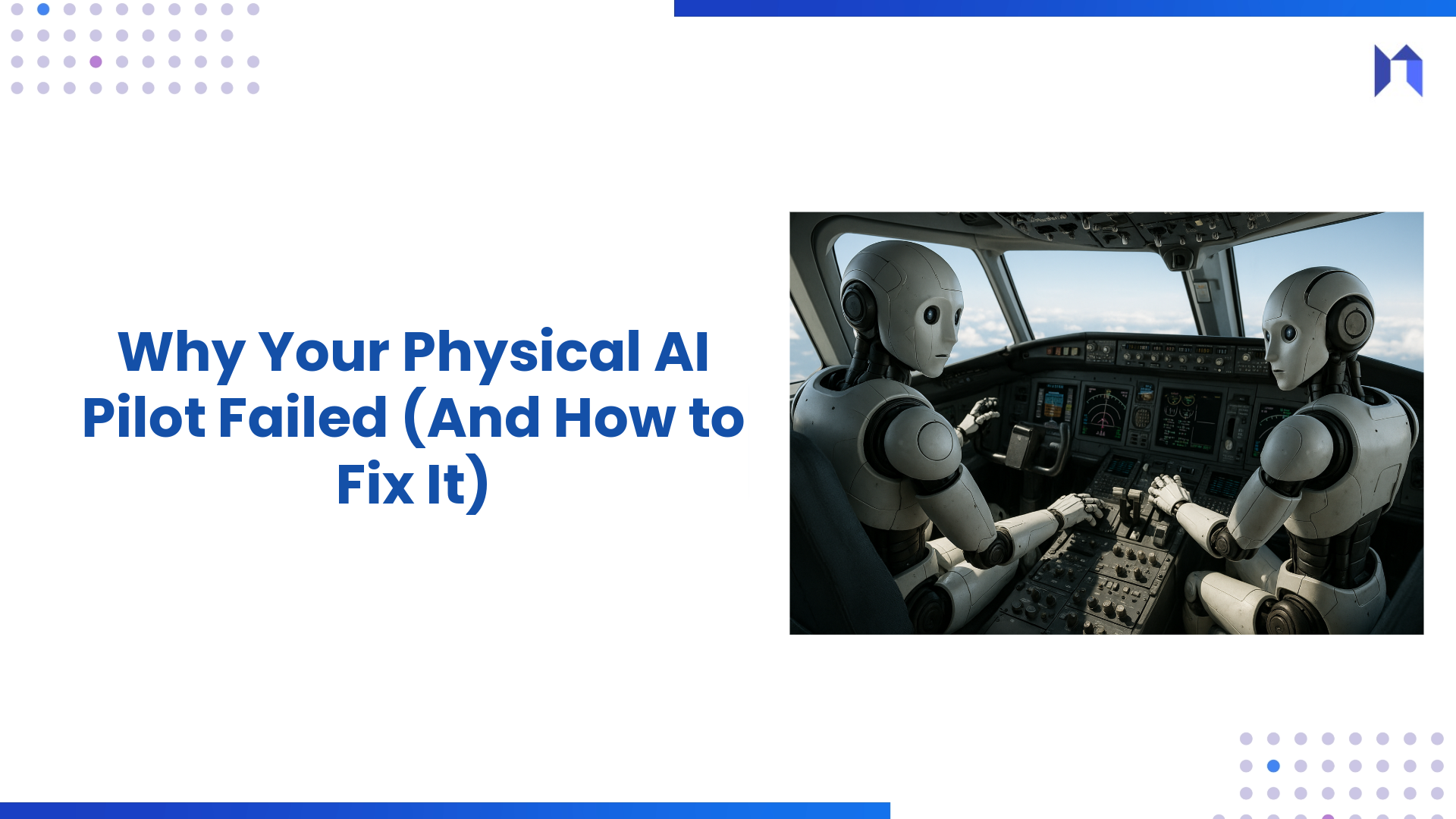
Why Your Physical AI Pilot Failed (And How to Fix It)
Most Physical AI pilot failed due to deployment gaps—learn the real causes and how to design pilots that scale successfully.
Reliability Engineering for Physical AI: Beyond Mean Success Rates
Explore reliability engineering for Physical AI, focusing on performance beyond mean success rates for optimal outcomes.
The Integration Problem: Why Physical AI Must Connect to Everything
Learn why the integration problem is crucial for Physical AI deployment and how it drives real-world success.
From Lab to Factory: What Physical AI Systems Actually Need
Learn how to ensure physical AI systems meet production requirements for real-world deployment success from lab to factory.
Why 95% Success Rate Means Failure in Physical AI
A 95% success rate sounds impressive — until you realize it means 50+ failures per day in production.
Private Cloud AI Inference: Cost, Control & Compliance
Private Cloud AI Inference enables predictable cost, control & compliance-ready AI deployment with NexaStack for enterprises.
Scaling AI Across the Enterprise: A Platform-First Approach
Scaling AI Across the Enterprise A Platform-First Approach enables secure governed and scalable AI adoption across global enterprises.
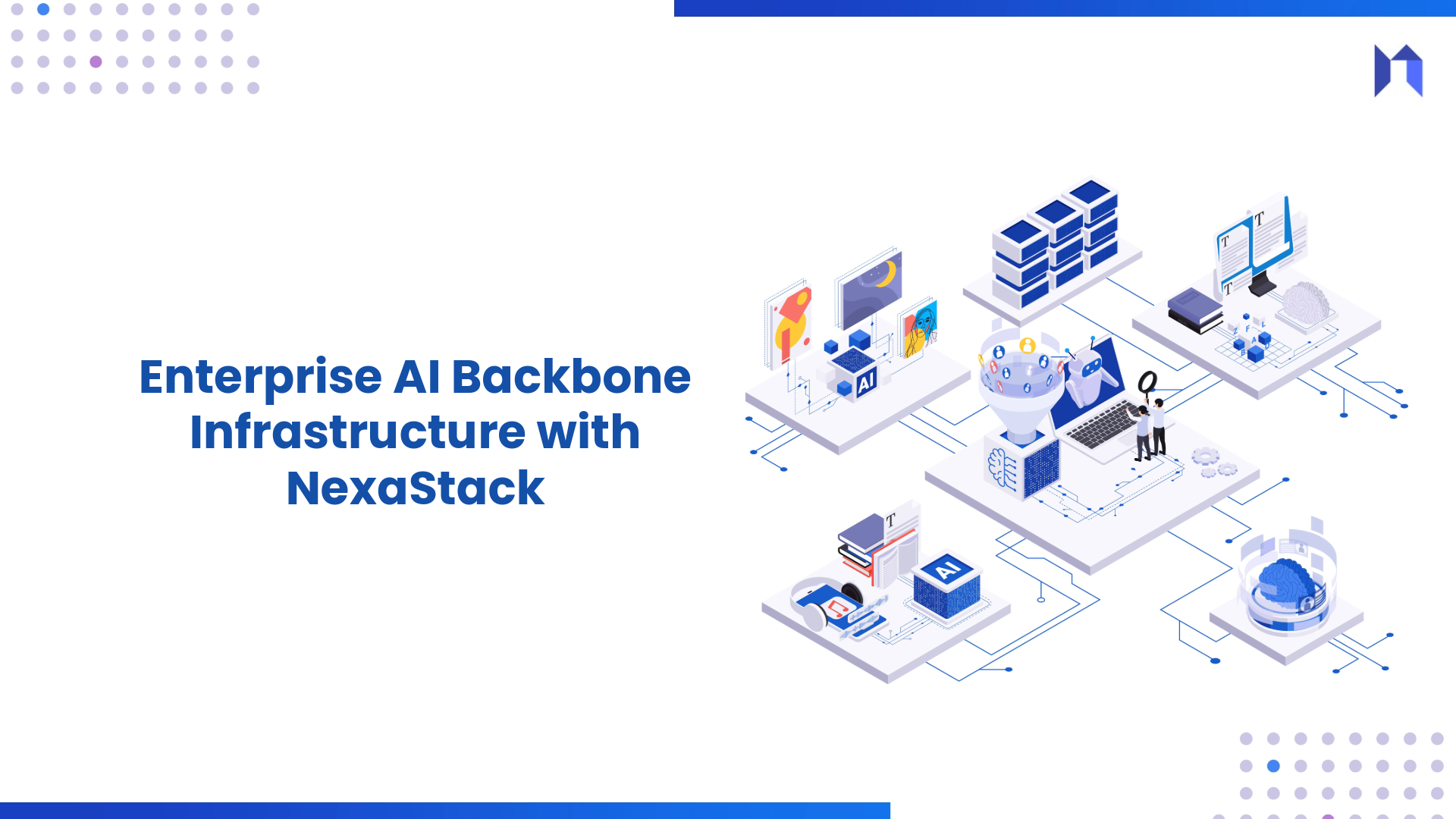
Enterprise AI Backbone Infrastructure with NexaStack
Enterprise AI backbone infrastructure with NexaStack enables secure, scalable, agentic AI operations across private, hybrid, and sovereign ...
Foundation Models: Risk, Hallucinations & Explainability
Foundation models - Risk, hallucinations & explainability impact enterprise AI trust, governance, compliance, and safe deployment at scale.
Model Cards and AI Fact Sheets: Building Governance-Ready AI
Model cards and AI fact sheets enable governance-ready AI through transparency, compliance alignment, risk management, and deployment.
Agentic AI and GRC: Challenges in Multi-Agent Autonomous Systems
Agentic AI governance challenges in multi-agent autonomous systems, covering GRC, security, and responsible enterprise AI adoption.
AI Factory-as-a-Service for Managed Private Compute
AI factory-as-a-service for managed private compute enables secure, scalable private cloud AI infrastructure for enterprise agentic workloads.
Driving Business Value with GenAI: A Strategic Adoption Playbook
Driving business value with GenAI enables enterprises to scale AI adoption, optimize decisions, and deliver measurable operational outcomes.
Why Model Registries Matter in Enterprise LLMOps?
Model registries matter in enterprise LLMOps ensures governance, versioning, compliance, reproducibility, and secure deployment of AI models.
Emerging LLM Techniques for Industry-Grade Applications
Explore LLM techniques enabling Private cloud AI, sovereign AI, Agentic AI, and AI agent deployment at scale.
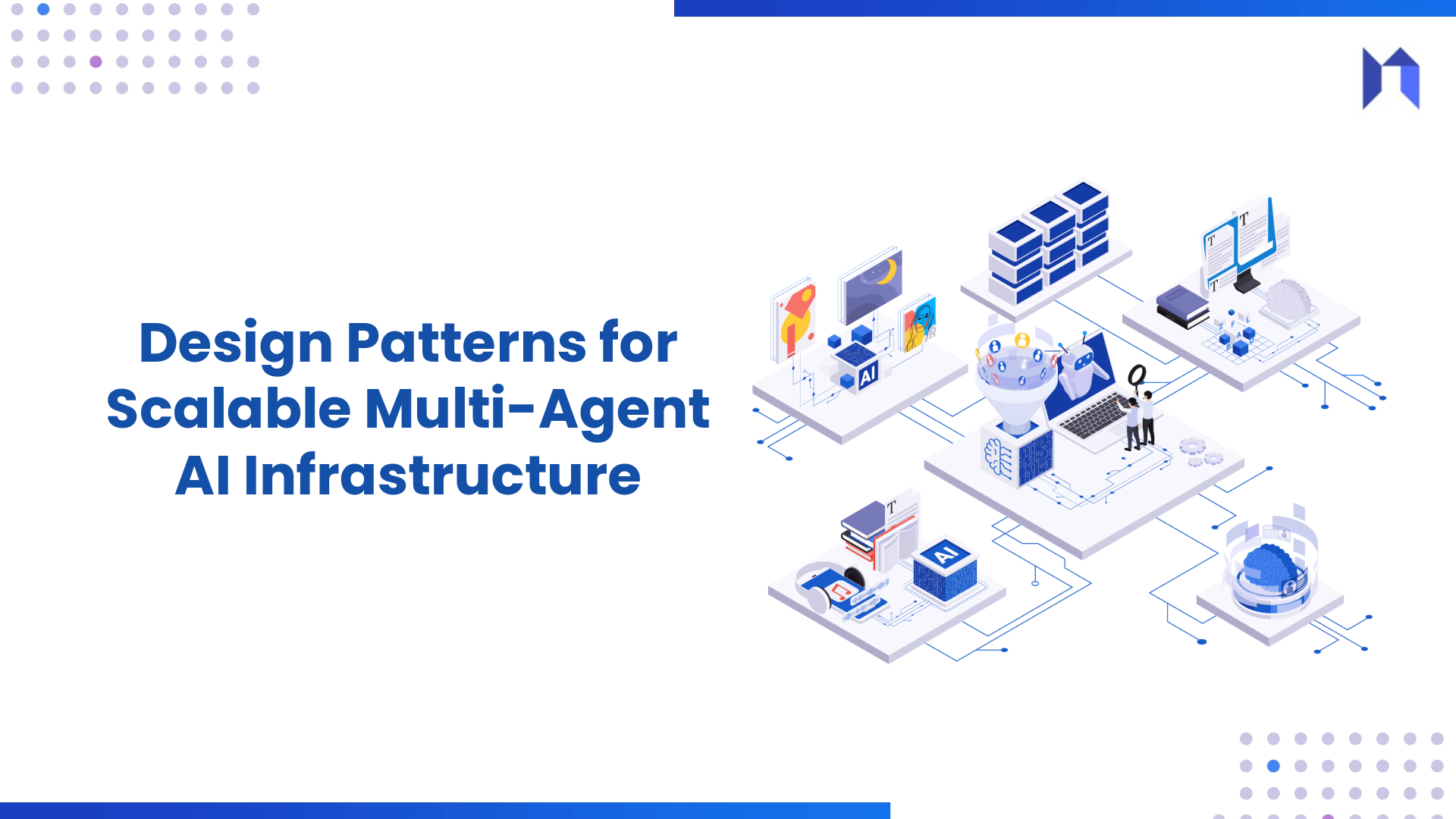
Design Patterns for Scalable Multi-Agent AI Infrastructure
Design patterns for scalable multi-agent AI infrastructure enabling agentic AI, AI agent orchestration on private cloud AI.
How NexaStack Powers Coordination in Multi-Agent Environments
NexaStack enables secure coordination, orchestration, and real-time reasoning across scalable multi-agent environments for enterprise systems.
On-Premises AI Platform for Regulated Environments
On-Premises AI platform for regulated environments ensures secure, compliant, high-performance AI deployment for sensitive enterprise workloads.
Vision AI at the Edge: Inference Pipelines with RLaaS
Vision AI at the edge: inference pipelines with RLaaS enable real-time learning, secure processing, and scalable autonomous vision systems.
MCP Server for Distributed AI Control
MCP server for distributed AI control delivers secure governance, reliable agent coordination, and scalable autonomous operations for enterprises.
Evaluating and Comparing LLM Techniques for On-Premise Deployments
Evaluating and comparing llm techniques for on-premises deployments helps enterprises optimize secure, scalable AI performance across environments.
RLaaS vs Traditional MLaaS: A Strategic Comparison for Modern AI Teams
Compare RLaaS with traditional MLaaS to understand differences in automation, adaptability, scalability, and real-time decision-making capabilities.
Integrating MCP with RLaaS and LLMOps for R&D Workflows
Integrating MCP with RLaaS and LLMOps streamlines R&D workflows, improving experimentation, automation, scalability, and AI-driven innovation.
Automating the AI Model Lifecycle in Enterprises
Automate the AI model lifecycle with secure, scalable workflows that streamline deployment, monitoring, optimization, and governance for enterprises.
Why Smart Enterprises Choose Private Cloud AI Over Public Cloud?
Smart enterprises adopt Private Cloud AI for security, sovereignty, compliance, performance, and full control over public clouds.
Scalable Vision AI Stack with NexaStack
Scalable Vision AI Stack by NexaStack enabling secure inference, multimodal agents, and high-performance computer vision workloads.
Composable Compute Infrastructure for Agentic AI
Composable compute infrastructure accelerates agentic AI with faster performance, reduced bottlenecks, and scalable private cloud efficiency.
Private AI Clusters for Regulated Industries
Build secure Private AI clusters for regulated industries to ensure compliance, data control, sovereignty, governance, and reliable enterprise ...
Designing Low-Latency Pipelines for Real-Time Inference at the Edge
Low-latency pipelines enabling real-time decisioning with private cloud AI, sovereign AI, and agentic AI capabilities.
Open Telemetry & AI Agents – Building Observability from the Ground Up
Open Telemetry enhances AI agent observability by delivering unified tracing, metrics, and logs for reliable, compliant, production-grade agentic ...
Leveraging Private Cloud Compute for Secure and Scalable AI Workloads
Secure private cloud compute for scalable AI workloads with sovereign control, high performance, and strong data protection.
On-Prem AI Agents for Manufacturing, Finance & Healthcare
On-prem AI agents enabling secure, compliant, high-performance automation for manufacturing, finance, and healthcare with sovereign control.
Governing AI Systems: How Agentic GRC Enables Responsible AI Operation
Governing AI systems: How agentic GRC enables responsible AI operation through governance, compliance, risk management, and accountability.
5 Key Observability Metrics for Deploying a Private AI Assistant
Discover key observability metrics for optimizing and monitoring the performance of a private AI assistant.
Agentic GRC: From Reactive to Continuous Cybersecurity Assurance
Discover how Agentic GRC transforms cybersecurity by shifting from reactive defense to continuous compliance and cybersecurity assurance.
Agentic GRC for Health & Safety: AI-Driven Compliance & Accountability
Ensure continuous compliance and workplace safety with Agentic GRC — AI-driven accountability, risk monitoring, and autonomous governance automation.
Editors' Picks
Get more Latest Blogs
Logistics AI Conferences 2027: Verified Dates
Logistics and supply chain AI conferences for 2026–2027 with dates verified on official sites: ...
Manufacturing AI Conferences 2027: Verified List
Manufacturing AI conferences for 2026–2027 with dates verified on official sites: Automate, NVIDIA ...
Robotics Conferences 2027: Verified Dates and Picks
Robotics conferences for 2026–2027 with dates verified on official sites: Automate, NVIDIA GTC and ...
Predictive AI in Supply Chain: 2026 Guide
Predictive AI in supply chain for 2026: demand, supply and disruption forecasting, AI planning ...
GPU Data Visualization in 2026: Tools and Architecture
GPU data visualization in 2026: how RAPIDS, deck.gl, Datashader and Omniverse render billions of ...
Model Explainability in 2026: Methods and Tools
Model explainability in 2026: SHAP, LIME, counterfactuals and interpretability tools, EU AI Act ...
Featured Series
Agentic AI
Intelligent visual AI agents that perceive, analyze, and act with precision for smarter decision-making
Logistics AI Conferences 2027: Verified Dates
Logistics and supply chain AI conferences for 2026–2027 with dates verified on official sites: Gartner, AWS re:Invent and Automate, plus a ...
Manufacturing AI Conferences 2027: Verified List
Manufacturing AI conferences for 2026–2027 with dates verified on official sites: Automate, NVIDIA GTC, AWS re:Invent and Gartner, plus a pilot-first ...
Robotics Conferences 2027: Verified Dates and Picks
Robotics conferences for 2026–2027 with dates verified on official sites: Automate, NVIDIA GTC and AWS re:Invent, plus how to turn an event into a ...
Predictive AI in Supply Chain: 2026 Guide
Predictive AI in supply chain for 2026: demand, supply and disruption forecasting, AI planning agents, a reference architecture, ROI logic and a ...
GPU Data Visualization in 2026: Tools and Architecture
GPU data visualization in 2026: how RAPIDS, deck.gl, Datashader and Omniverse render billions of points, a reference architecture and a 30-day plan.
Model Explainability in 2026: Methods and Tools
Model explainability in 2026: SHAP, LIME, counterfactuals and interpretability tools, EU AI Act deadlines, an explainability architecture and a ...
Neural Architecture Search (NAS): 2026 Guide
Neural architecture search in 2026: how NAS finds faster, smaller models, hardware-aware NAS for edge and LLMs, tools, costs and a 30-day pilot plan.
Model Collapse in AI: 2026 Guide to Prevention
Model collapse in 2026: why AI trained on AI-generated data degrades, early warning signs, the research on prevention and a 30-day data provenance ...
Latent Variable Models in 2026: A Practical Guide
Latent variable models in 2026: VAEs, latent diffusion, world models and JEPA explained, with enterprise uses, a reference architecture and a 30-day ...
LLMs and Knowledge Graphs: 2026 Enterprise Guide
LLMs and knowledge graphs in 2026: how LLMs build graphs, how GraphRAG grounds answers, agent memory, architecture, cost trade-offs and a 30-day plan.
Image Synthesis Models in 2026: How They Work
Image synthesis models in 2026: how GANs, diffusion, DiT and flow models create images, leading models compared, agentic image workflows and ...
Generative AI for Smart Cities: 2026 Guide
Generative AI for smart cities in 2026: traffic, public safety and citizen-service use cases, a privacy-first architecture, EU AI Act rules and a ...
AI Video Investigations in 2026: A Practical Guide
AI video investigations: why manual CCTV review fails, how natural-language video search and VLM agents speed up cases, privacy rules and a 30-day ...
AI Image Restoration in 2026: Models and Uses
AI image restoration in 2026: how GAN, transformer and diffusion models denoise, deblur and upscale images, enterprise uses, fidelity risks and a ...
Generative AI in Supply Chain: 2026 Use Cases
Generative AI in supply chain in 2026: use cases for planning, suppliers and logistics, how agents work with optimizers, risks and a 30-day pilot ...
Smart Irrigation with IoT and ML: 2026 Guide
Smart irrigation with IoT and machine learning in 2026: soil sensors, evapotranspiration models, edge control, architecture, ROI logic and a 30-day ...
3D Vision and Depth Estimation: 2026 Guide
3D vision and depth estimation in 2026: lidar vs stereo vs monocular depth AI, Depth Anything V2, Depth Pro, VGGT, industrial uses and a 30-day pilot ...
Autonomous Retail Operations: 2026 Guide for Stores
Autonomous retail operations in 2026: how vision AI, edge computing and AI agents run shelves, checkout, loss prevention and replenishment, plus a ...
IoT Trends 2026: 10 Shifts Leaders Must Plan For
IoT trends for 2026: edge AI, agents on device data, Matter, the EU Cyber Resilience Act, digital twins and physical AI, with what each means for ...
Smart City Computer Vision in 2026: Privacy First
Smart city computer vision in 2026: traffic, safety and asset use cases, privacy-by-design edge architecture, EU AI Act and GDPR rules, and a 30-day ...
Responsible AI in Manufacturing: 2026 Guide
Responsible AI in manufacturing for 2026: EU AI Act dates, safety, worker monitoring, explainability, a governance lifecycle and a 30-day plan for ...
Edge AI vs Federated Learning: 2026 Comparison
Edge AI vs federated learning: what each does, key differences, when to combine them, privacy and cost trade-offs, and a 30-day plan to start.
Energy-Efficient Computer Vision Models: 2026 Guide
Energy-efficient computer vision models in 2026: efficient architectures, quantization, pruning, distillation, edge hardware per watt and a 30-day ...
Edge Computing for Autonomous Security in 2026
Edge computing for autonomous security in 2026: how edge AI detects and responds to physical and IoT threats on-site, zero trust design and a 30-day ...
LLMs in Manufacturing: 2026 Use Cases and Pilot Plan
LLMs in manufacturing in 2026: use cases that pay back, a private plant architecture, risks and a 30-day pilot plan for maintenance, quality and ...
Enterprise Agentic AI in 2026: Pilot to Production
Enterprise agentic AI in 2026: how to move AI agents from pilot to production with the right operating model, platform, governance, ROI case and ...
How to Choose an IoT Platform in 2026
How to choose an IoT platform in 2026: device management, OTA updates, edge runtime, security and Cyber Resilience Act needs, AWS vs Azure vs open ...
Edge AI in Healthcare: 2026 Uses, Risks and Rules
Edge AI in healthcare in 2026: where on-device AI helps imaging, monitoring and hospital operations, the FDA and EU AI Act rules, and a safe 30-day ...
Robotics Technology in 2026: How Modern Robots Work
Robotics technology in 2026: how modern robots sense, think and act, the main robot types, the AI stack behind them, market data and how to start a ...
Multimodal AI Agents in 2026: Architecture and Uses
Multimodal AI agents in 2026: how agents that see, hear and read work, VLM-based architecture, business use cases, cost and privacy, and a 30-day ...
Edge AI Companies in 2026: Who Does What
Edge AI companies in 2026 grouped by type: chipmakers, cloud edge services, dev platforms, integrators and edge AI ops platforms, plus how to pick ...
Edge AI in Agriculture: 2026 Guide to Smarter Farms
Edge AI in agriculture in 2026: how on-farm AI runs crop, irrigation, weed and livestock decisions without the cloud, plus architecture and a 30-day ...
Multi-Cloud ModelOps: 2026 Architecture Guide
Multi-cloud ModelOps in 2026: run, govern and monitor ML, LLM and agent models across AWS, Azure, Google Cloud and on-prem with one control plane.
Multi-Agent Systems on AWS: 2026 Architecture Guide
Multi-agent systems on AWS: Bedrock AgentCore and Strands Agents, orchestration patterns, a reference architecture, cost, security and a 30-day plan.
Deploying Microservices at the Edge: 2026 Guide
Edge microservices deployment in 2026: K3s, KubeEdge, AKS Edge Essentials and EKS Hybrid Nodes compared, GitOps rollout patterns and a 30-day plan.
Semantic Kernel Agentic Workflows: 2026 Guide
Semantic Kernel agentic workflows: how Microsoft Agent Framework succeeds Semantic Kernel, migration steps, Azure workflow patterns and a 30-day plan.
Video Alert Fatigue: How to Cut False Alarms in 2026
Video alert fatigue in 2026: why camera false alarms bury real threats, how AI verification and video agents cut the noise, and a 30-day plan to fix ...
Edge Computing and 5G in 2026: Enterprise Guide
Edge computing and 5G in 2026: how 5G edge works, private vs public 5G, network slicing, AI-RAN, use cases, costs and a 30-day plan for enterprise ...
Agentic Workflows in 2026: Patterns and Examples
Agentic workflows in 2026: what they are, how they differ from RPA and free agents, five orchestration patterns, real examples and a 30-day rollout ...
The Agentic Reasoning Loop Explained: 2026 Guide
The agentic reasoning loop explained for 2026: how AI agents plan, act, observe and reflect, ReAct and loop patterns, stop rules, cost limits and a ...
What Is Agentic AI? The 2026 Guide for Enterprises
What is agentic AI in 2026? A plain-English definition, how it differs from generative AI and AI agents, the architecture, risks and a 30-day start ...
Data-Centric vs Model-Centric AI: 2026 Guide
Data-centric vs model-centric AI in 2026: the real difference, when each wins, a comparison table, the data-centric workflow and a 30-day data ...
Machine Learning Model Visualization: 2026 Guide
Machine learning model visualization in 2026: architecture, training, explainability and production views, the best tools compared and how to use ...
Proactive Safety with Vision AI in 2026: A Guide
Proactive safety with vision AI in 2026: why reactive safety programs fail, how cameras spot hazards before injuries, privacy rules and a 30-day ...
What Is a Convolutional Neural Network? 2026 Guide
What is a convolutional neural network in 2026? How CNN layers work, CNN vs vision transformers, real business uses, edge deployment and how to ...
What Is Agentic Video Intelligence? 2026 Guide
What is agentic video intelligence? How video AI agents use VLMs to see, reason and act on live video, how it beats classic analytics, and how to ...
AI in Food Manufacturing: 2026 Use Cases and ROI
AI in food manufacturing in 2026: vision inspection, foreign-material detection, predictive maintenance, traceability, ROI logic and a 30-day plant ...
Embodied AI Agents in 2026: How Robots Learn to Act
Embodied AI agents in 2026: how VLA models, world models and simulation help robots perceive, reason and act, plus architecture and a 30-day pilot ...
Cloud vs Edge for Vision AI Workloads in 2026
Cloud vs edge for vision AI workloads in 2026: a decision framework on latency, cost, privacy and connectivity, a hybrid architecture and a 30-day ...
AutoML Challenges in 2026 and How to Solve Them
AutoML challenges in 2026: data prep, leakage, explainability, cost and deployment gaps, how AutoML tools compare, and how to get models to ...
FinOps for AI Infrastructure: 2026 Cost Control Guide
FinOps for AI infrastructure in 2026: control GPU, token and inference costs with unit economics, PTUs vs pay-as-you-go, showback and a 30-day plan.
Edge AI Computer Vision in 2026: Platforms and Stack
Edge AI computer vision in 2026: the five-layer stack from cameras to fleet management, what replaced Azure Percept and AWS Panorama, and a 30-day ...
Generative AI Use Cases in 2026: 12 That Pay Back
Generative AI use cases in 2026: 12 enterprise applications that pay back, how to rank them by value and risk, a reference architecture and a 30-day ...
Enterprise ML Platform in 2026: How to Choose One
Enterprise ML platform guide 2026: must-have capabilities, SageMaker vs Azure ML vs NVIDIA vs private stacks, reference architecture and a 30-day ...
Edge AI Video Surveillance in 2026: Architecture Guide
Edge AI video surveillance in 2026: smart camera vs edge server vs cloud, reference architecture, sizing questions, privacy rules and a 30-day pilot ...
Real-Time Anomaly Detection: 2026 Architecture Guide
Real-time anomaly detection in 2026: streaming architecture, edge vs cloud scoring, latency budgets, tools after Azure Anomaly Detector, and a 30-day ...
AI in Precision Automotive Manufacturing: 2026 Guide
AI in precision automotive manufacturing in 2026: edge vision inspection, tool-wear prediction, digital twins, ROI logic and a 30-day pilot for parts ...
Edge AI Applications in 2026: Use Cases and Security
Edge AI applications in 2026 by industry, from factories to hospitals, plus how to secure edge AI devices, models and data and a 30-day start plan.
Deep Learning Anomaly Detection: 2026 Methods Guide
Deep learning anomaly detection in 2026: autoencoder, forecasting, graph and transformer methods compared, when to use each, and a 30-day pilot plan.
Agentic AI in Manufacturing: 2026 Plant Playbook
Agentic AI in manufacturing in 2026: plant use cases, reference architecture, ROI logic, risks and a 30-day pilot plan for maintenance, quality and ...
Agentic AI at the Edge in 2026: Architecture and Uses
Agentic AI at the edge in 2026: how AI agents run on local hardware next to machines and cameras, reference architecture, risks, costs and a 30-day ...
Model Deployment Testing 2026: Shadow, Canary, A/B
Model deployment testing in 2026: shadow, canary, blue/green and A/B rollouts for ML and LLM models, rollback rules, cloud options and a 30-day plan.
Reasoning Loop Observability for AI Agents in 2026
Reasoning loop observability in 2026: how to trace every plan, tool call and decision an AI agent makes, what to measure, and a 30-day rollout plan.
ModelOps Monitoring KPIs: The 2026 Scorecard
ModelOps monitoring KPIs for 2026: drift, quality, latency, cost and governance metrics for ML, LLM and agent models, with a scorecard and 30-day ...
What Is ModelOps? Enterprise Guide for 2026
What is ModelOps in 2026? How it governs every AI model in production, ModelOps vs MLOps, the lifecycle, EU AI Act timing and a 30-day plan.
Model Robustness in 2026: How to Build and Test It
Model robustness in 2026: what makes a robust model, how to test for noise, data shift and adversarial attacks, and how to keep ML and LLM models ...
Azure Vision for Retail and Logistics in 2026: Guide
Azure Vision for retail and logistics in 2026: Image Analysis and Custom Vision retirements, replacements, and vision AI for Azure supply chain ...
Model Validation in 2026: Techniques and Workflow
Model validation in 2026: techniques, metrics and a validation workflow for ML, LLM and agent models, plus regulatory expectations and a 30-day plan.
Multi-Access Edge Computing (MEC) in 2026: A Guide
Multi-access edge computing (MEC) in 2026: how telco edge works, ETSI MEC standards, AWS Wavelength, private 5G vs on-prem edge, AI use cases and how ...
Azure Machine Learning in 2026: Features and Collaboration
Azure Machine Learning in 2026: services, how collaboration works through workspaces and registries, SDK v1 and prompt flow retirements, and MLOps ...
What Is Edge Computing? The 2026 Guide for Enterprises
What is edge computing in 2026? How it works, edge vs cloud, the layers of an edge architecture, IoT edge solutions, edge AI, costs and how to start.
AWS Panorama End of Support: 2026 Migration Guide
AWS Panorama reached end of support on 31 May 2026. What it did, why devices stopped working, and how to migrate edge computer vision to Jetson and ...
Agentic AI Retail Recommendations: Amazon-Style in 2026
How the Amazon recommendation system works and how retailers build agentic AI recommendations in 2026: architecture, AWS options, risks and a 30-day ...
AWS IoT Greengrass Edge AI in 2026: V2, Neo and Migration
AWS IoT Greengrass for edge AI in 2026: V1 end of support, Greengrass V2 and nucleus lite, SageMaker Neo, Edge Manager replacements and a migration ...
Augmented AI vs Machine Learning: 2026 Guide
Augmented AI in 2026: how human-in-the-loop AI differs from full automation, what replaces Amazon A2I, and how to design human review for AI agents.
AI Video Surveillance in 2026: Safe, Private, Compliant
AI video surveillance in 2026: how AI cameras and video agents improve security and safety, workplace privacy rules, edge architecture and how to ...
Edge and Hybrid Computing 2026: Examples and Architecture
Edge and hybrid computing in 2026: hybrid cloud computing examples, edge-to-cloud AI architecture, Azure Local, AWS and Google options, and a 30-day ...
NLP Tools in 2026: Libraries, APIs and LLM Platforms
NLP tools in 2026: open-source libraries, cloud NLP APIs and LLM platforms compared, and how to pick the right natural language processing software.
What Is a Foundation Model? Enterprise Guide 2026
What is a foundation model in 2026? Definition, types (LLM, vision, world models), build vs adapt choices, costs and how to run them privately at the ...
Image and Video Analytics on Databricks: 2026 Guide
Databricks computer vision in 2026: store, label, train and serve image and video analytics with Unity Catalog, ai_query and edge inference.
Speech Recognition in 2026: How Enterprise ASR Works
Speech recognition in 2026: how modern ASR works, cloud vs open models like Whisper and Parakeet, accuracy and privacy trade-offs, and private ...
Generative AI Tools in 2026: An Enterprise Buyer's Guide
Generative AI tools in 2026: the main categories, how enterprises compare assistants, platforms and open models, private deployment and a 30-day plan.
Agentic Intelligent Automation in 2026: 10 Examples
Intelligent process automation examples for 2026: how agentic AI extends RPA and IPA, 10 real use cases, architecture, risks and a 30-day start plan.
Deep Learning vs Neural Networks: 2026 Explainer
Deep learning vs neural networks in 2026: the real difference, how both relate to machine learning, a comparison table and how to pick for your use ...
Autonomous Operations in 2026: From Automation to Agents
Autonomous operations in 2026: how AI agents move IT, plant and network operations from automation to self-healing, with architecture, KPIs and a ...
CI/CD for Machine Learning in 2026: Pipeline Guide
CI/CD for machine learning in 2026: how continuous integration, delivery and training work for ML, LLM and agent pipelines, tools and a 30-day plan.
Large-Scale Image Datasets on Databricks in 2026
Large-scale image datasets on Databricks in 2026: store images in Unity Catalog volumes, curate with Spark, stream to GPUs and deploy vision models ...
AI in Renewable Energy 2026: Forecasting, Grid and O&M
AI in renewable energy in 2026: solar and wind forecasting, grid optimisation, predictive maintenance, edge AI architecture and a 30-day plan.
Real-Time Video Streaming with Edge AI: 2026 Guide
Real-time video streaming in 2026: WebRTC, MoQ and edge AI pipelines that turn live camera feeds into decisions in under a second, plus a 30-day plan.
AI in Telecommunications 2026: Agentic AI Use Cases
AI in telecommunications in 2026: agentic AI use cases for networks, RAN, care and fraud, Level 4 autonomous networks, architecture and where to ...
IoT Development Companies in 2026: How to Choose One
IoT development companies in 2026: the types of partners, IoT analytics companies vs builders, CRA security rules, edge AI and how to choose the ...
ML Model Testing in 2026: Train, Test and Evaluate
ML model testing in 2026: training vs testing data, data and behavioural tests, LLM and agent evaluation, tools and a release workflow.
Automotive Supply Chain AI: Optimization Guide for 2026
Automotive supply chain optimization with AI in 2026: chip and rare earth shocks, battery passports, digital twins, AI agents and a 90-day plan.
Machine Learning Pipeline in 2026: Stages and Tools
Machine learning pipeline guide for 2026: stages, architecture patterns, orchestrators and best practices for ML, LLM and agent workloads.
Synthetic Data Generation with Generative AI in 2026
Synthetic data generation with generative AI in 2026: methods, world models, enterprise use cases, privacy risks and how to validate synthetic data.
Sentiment Analysis with NLP in 2026: Methods and Tools
Sentiment analysis with NLP in 2026: types, how it works, lexicon vs transformer vs LLM approaches, tools and a step-by-step pipeline.
Graph Neural Network Applications: 8 Real Uses in 2026
Applications of graph neural networks in 2026: traffic, chip design, recommendations, drug discovery, supply chain, telecom and cybersecurity, with ...
Real-Time AI Inference in 2026: Applications and Stack
Real-time AI inference in 2026: real-time applications of AI, online vs batch prediction, the streaming and serving stack, and how to design for low ...
AI Agents with Amazon Kendra in 2026: Migration Guide
Amazon Kendra is in maintenance mode in 2026. How AI agents use Kendra, what replaces it (Bedrock Knowledge Base, AgentCore) and how to migrate.
What Is TensorFlow Used For in 2026? An Honest Guide
What is TensorFlow used for in 2026? An honest guide to TensorFlow 2.21, Keras 3, LiteRT and when to choose TensorFlow, PyTorch or JAX.
Visual Dialog Systems in 2026: How Image Chat AI Works
Visual dialog systems in 2026: how image chat AI and vision language models answer multi-turn questions about images and video.
12 NLP Applications and Examples in 2026
12 NLP applications and examples of NLP in 2026, from AI assistants and RAG search to document AI, sentiment and clinical notes, by industry.
Predictive Maintenance Inference: Deploying Models in 2026
Predictive maintenance inference in 2026: how to deploy PdM models at the edge and in the cloud, serve RUL predictions and turn alerts into work ...
What Is an AI Factory? Enterprise Guide for 2026
What an AI factory is in 2026: the GPU, data, software and ops layers that turn data into tokens and decisions, and how enterprises build one ...
NLP vs NLU vs NLG: Key Differences Explained (2026)
NLP vs NLU vs NLG explained for 2026: what each does, how LLMs combine them, a comparison table, examples and how to test each.
AWS Inferentia in 2026: Inf2, Neuron SDK and Inference
AWS Inferentia in 2026: how Inf2 instances serve LLM and multimodal inference, the Neuron SDK and vLLM, and when Trainium or GPUs fit better.
What Is AgentOps? Operating AI Agents in 2026
AgentOps in 2026: how to deploy, observe, evaluate and govern AI agents in production, how it differs from MLOps and LLMOps, and the tools to use.
Visual Anomaly Detection in 2026: Methods and Use Cases
Visual anomaly detection in 2026: how AI spots defects in images, from PatchCore to zero-shot VLMs, plus MVTec AD 2, Anomalib and edge deployment.
Digital Twin in Manufacturing: Industry 4.0 Guide 2026
Industry 4.0 digital twin guide for 2026: how manufacturers use product, process and factory twins, real examples, architecture and how to start.
NLP Techniques in 2026: From Tokens to LLM Agents
Natural language processing techniques in 2026: tokenization, NER, embeddings, transformers, RAG, fine-tuning and evaluation, and when to use each.
GPU Parallel Processing for Computer Vision in 2026
GPU parallel processing for computer vision in 2026: why GPUs win, the NVIDIA stack, edge vs server GPUs, multi-camera sizing and cost tips.
What Is Edge Analytics? 2026 Guide, Tools and Use Cases
Edge analytics explained for 2026: how analysing data at the source works, its types, tools like Greengrass and Azure IoT Operations, and use cases.
Predictive Maintenance ROI: Cutting Downtime in 2026
Build the business case for a predictive maintenance system in 2026: what downtime really costs, how to calculate ROI, and how to run a pilot.
Defect Detection with Deep Learning: 2026 Guide
Defect detection with deep learning in 2026: classification, detection, segmentation and anomaly models, datasets, synthetic data and edge deployment.
AI Agents on Databricks in 2026: Agent Bricks Guide
AI agents on Databricks in 2026: Agent Bricks, Genie, Unity Catalog and AI Gateway, what became of LakehouseIQ, and how to run governed agents.
Real-Time Feature Engineering for ML in 2026: Guide
Real-time feature engineering in 2026: streaming features, feature stores, on-demand transforms and train-serve consistency for fraud, recsys and ...
AI Quality Control in Manufacturing: 2026 Guide
AI quality control in manufacturing for 2026: vision inspection, predictive quality from process data, root-cause agents, and how to start a pilot.
CRNN Model for Text Recognition: 2026 Guide
How the CRNN model recognizes text with CNN, BiLSTM and CTC, how it compares with transformer and VLM OCR in 2026, and when CRNN still fits best.
Federated Learning Applications in 2026: A Practical Guide
Federated learning applications in 2026: how it works, real uses in mobile, healthcare, finance and industry, the main tools, and its privacy limits.
AI Log Analysis with Agentic AI: 2026 Guide
AI log analysis in 2026: how agentic AI reads, correlates and acts on logs, the tools that matter, a reference architecture and safety guardrails.
Vision Inspection on the Assembly Line: 2026 Guide
AI vision inspection on the assembly line in 2026: what it checks, cameras and edge hardware, rule-based vs deep learning, and a 30-day pilot plan.
AI and IoT in Smart Homes: 2026 Guide to What Works
AI and IoT in smart homes in 2026: Matter 1.5, generative voice assistants, local edge AI, energy management and the security rules to plan for.
Generative Adversarial Networks (GANs) in 2026: Guide
Generative adversarial networks explained for 2026: how GANs synthesize images, how they compare with diffusion, and where GANs still win today.
Edge AI for the Smart Factory: 2026 Playbook
Edge AI for the smart factory in 2026: use cases, reference architecture, hardware like Jetson Thor, OT security and a 90-day plan for plant teams.
Enterprise Machine Learning Use Cases in 2026: A Guide
Enterprise machine learning in 2026: the use cases that pay off, why projects stall, and how MLOps, private AI and AI agents change the playbook.
Agentic Process Automation in 2026: Guide and Use Cases
Agentic process automation in 2026: how AI agents extend RPA, which process automation technologies to use, real use cases, risks and governance.
AI Agent Performance KPIs: What to Measure in 2026
AI agent performance KPIs for 2026: reliability, cost per task, autonomy, adoption and business value metrics, with targets and how to track them.
Agent Observability Tools in 2026: Tracing and Evals
Agent observability tools in 2026: tracing, evals and cost tracking with OpenTelemetry, Langfuse and cloud consoles, plus how to choose and run them.
AI Agent Infrastructure Stack: 2026 Guide for Enterprises
The AI agent infrastructure stack in 2026: models, runtimes, MCP and A2A, memory, identity, observability and governance, and how to run it privately.
Graph Neural Networks (GNNs): Guide and Uses in 2026
Graph neural networks in 2026: how GCN, GAT, GraphSAGE and graph transformers work, plus uses in fraud, supply chain, GraphRAG and production tips.
Neural Network Applications by Industry in 2026
Neural network applications in 2026 by industry: vision, speech, forecasting, foundation models, edge inference and physical AI, with sourced ...
Types of Generative AI Models in 2026: A Practical Guide
Types of generative AI models in 2026: LLMs, diffusion, vision-language, world models and small edge models, and how enterprises run them privately.
Distributed Machine Learning in 2026: Training & Inference
Distributed machine learning in 2026: PyTorch FSDP, DeepSpeed, Ray, vLLM and Kubernetes GPU scheduling for private AI training and inference clusters.
ML Platform Tools in 2026: MLOps, LLMOps and AgentOps
Compare machine learning tools and platforms in 2026: MLOps, LLMOps and AgentOps stacks, build vs buy, and how to run them on private infrastructure.
Medical Image Analysis with AI in 2026: A Practical Guide
How AI medical image analysis works in 2026: FDA-listed devices, radiology and pathology foundation models, EU AI Act rules and on-prem deployment.
Inception Model (GoogLeNet) Explained: 2026 Guide
What the Inception model is, how GoogLeNet and Inception-v3 work, what replaced them by 2026, and when Inception-style CNNs still suit edge devices.
Vision Transformers (ViT) in 2026: Guide for Edge AI
How vision transformers work, how they compare with CNNs, and which ViT backbones (DINOv3, SigLIP 2, SAM 3) fit edge devices in 2026.
Computer Vision in Supply Chain: 2026 Use Cases Guide
Where computer vision pays off in supply chains in 2026: warehouse vision, dimensioning, robot picking, yard and dock vision, and inventory drones.
Autonomous Store Technology in 2026: What Actually Works
Amazon is closing its Go and Fresh stores. See which autonomous store tech still works in 2026: smart carts, shelf vision, RFID and AI self-checkout.
Manufacturing Process Automation in 2026: A Practical Guide
How manufacturing process automation works in 2026: PLCs, robots, vision, AI agents, industrial copilots and humanoid pilots, plus how to start.
What Is the Intelligent Edge? 2026 Guide and Use Cases
The intelligent edge explained for 2026: how edge AI works, the 3 Cs, OT vs IT vs IoT edges, hardware, use cases and how to run it at scale.
10 Industrial IoT Applications for 2026 (With Examples)
Ten industrial IoT applications that deliver results in 2026, from predictive maintenance to vision inspection, with examples and how edge AI fits.
12 Edge Computing Applications by Industry (2026)
Real edge computing applications in manufacturing, retail, healthcare, energy, telecom and more, with what runs at the edge and why.
Enterprise Manufacturing Intelligence in 2026: Guide
What enterprise manufacturing intelligence (EMI) is in 2026, how it differs from MES, the data stack behind it, use cases and where AI agents fit.
Serverless vs Edge Computing: Key Differences 2026
Serverless vs edge computing explained: how edge functions like Cloudflare Workers and Lambda@Edge differ, and where AI inference runs.
IoT Analytics Platform 2026: Architecture and How to Choose
What an IoT analytics platform does, the 4-layer architecture, protocols, and how to compare cloud, open-source and industrial options in 2026.
Edge Data Management in 2026: A Practical Guide
How to collect, filter, model and govern data at the edge in 2026: architecture, tools, edge analytics and what to send to the cloud.
Edge vs Fog vs Cloud Computing: 2026 Guide
Edge, fog and cloud computing compared: where data is processed, latency, cost and when to use each layer for AI and IoT workloads.
TinyML and MLOps in 2026: Running AI on Microcontrollers
What TinyML is, what it's used for, which boards and tools to use (LiteRT, Edge Impulse, ESP32), and how to run MLOps for thousands of tiny devices.
Real-Time Video Analytics in 2026: Edge AI and VLMs
Real-time video analytics in 2026: how edge AI and vision language models turn camera feeds into alerts and actions, plus privacy rules to plan for.
MLOps for Edge AI: Tools, Security and Ops in 2026
How MLOps works when models run on edge devices: lifecycle, 7 security layers, MLOps vs ModelOps vs AIOps, and the edge tools that matter in 2026.
Edge Computing Platforms: How to Choose in 2026
What an edge computing platform does, the main types (cloud, Kubernetes, industrial, AI hardware), how they compare, and how to run AI agents at the ...
Robotics and AI in 2026: How Robots Learn and Work
How AI is changing robotics in 2026: robot foundation models, humanoids in factories, edge compute, and what it takes to run AI robots safely.
Top Computer Vision Conferences in 2027: Dates and Locations
CVPR, ICCV and WACV 2027: dates, cities and what each covers, plus what changed for industry teams attending in 2027.
Predictive Maintenance with IoT and AI: 2026 Guide
How IoT sensors, edge AI and maintenance agents predict failures in machines and vehicle fleets: costs, tools, steps and limits in 2026.
Azure AI Vision (Computer Vision API): 2026 Guide
What Azure AI Vision does, which API versions retire in 2026, how to use image analysis and OCR, and how to put vision into production with agents.
Azure Digital Twins in 2026: Guide and Fabric Options
How Azure Digital Twins works in 2026, DTDL, the updated data stack after Time Series Insights, Fabric Digital Twin Builder, and where twins head by ...
Machine Vision Applications and Trends in 2026
How machine vision works in 2026: 12 applications, AI and in-camera inspection, vision-language models, 3D robot guidance, and what changes by 2030.
Computer Vision Applications 2026: Real Examples by Industry
Computer vision applications in manufacturing, retail, security, logistics, energy and healthcare, with what each needs to work and how agents act on ...
What Is Physical AI? AI Agents for the Real World (2026)
Physical AI lets AI agents sense, decide and act on machines, sites and assets. How it works, real use cases, and how to run it safely in production.
Computer Vision Solutions 2026: Use Cases and How to Choose
Computer vision solutions by use case and industry, how to choose between building, buying or a platform, and how AI agents turn detections into ...
What Is Digital Twin Technology? How It Works in 2026
A digital twin is a live virtual copy of a physical asset or process. Learn how it works in 2026, the main types, real uses, and how AI agents act on ...
Physical AI Deployment Gap: From Demos to Deployment
Explore the Physical AI Deployment Gap and why robotics demos fail in production. Learn the architectural challenges blocking real-world deployment.
Physical AI vs Vision AI vs Robotics: Understanding the Differences
Physical AI vs Vision AI vs Robotics are often confused. You can learn how they differ and which capabilities your enterprise actually needs.
Why Your Physical AI Pilot Failed (And How to Fix It)
Most Physical AI pilot failed due to deployment gaps—learn the real causes and how to design pilots that scale successfully.
Reliability Engineering for Physical AI: Beyond Mean Success Rates
Explore reliability engineering for Physical AI, focusing on performance beyond mean success rates for optimal outcomes.
The Integration Problem: Why Physical AI Must Connect to Everything
Learn why the integration problem is crucial for Physical AI deployment and how it drives real-world success.
From Lab to Factory: What Physical AI Systems Actually Need
Learn how to ensure physical AI systems meet production requirements for real-world deployment success from lab to factory.
Why 95% Success Rate Means Failure in Physical AI
A 95% success rate sounds impressive — until you realize it means 50+ failures per day in production.
Private Cloud AI Inference: Cost, Control & Compliance
Private Cloud AI Inference enables predictable cost, control & compliance-ready AI deployment with NexaStack for enterprises.
Scaling AI Across the Enterprise: A Platform-First Approach
Scaling AI Across the Enterprise A Platform-First Approach enables secure governed and scalable AI adoption across global enterprises.
Enterprise AI Backbone Infrastructure with NexaStack
Enterprise AI backbone infrastructure with NexaStack enables secure, scalable, agentic AI operations across private, hybrid, and sovereign ...
Foundation Models: Risk, Hallucinations & Explainability
Foundation models - Risk, hallucinations & explainability impact enterprise AI trust, governance, compliance, and safe deployment at scale.
Model Cards and AI Fact Sheets: Building Governance-Ready AI
Model cards and AI fact sheets enable governance-ready AI through transparency, compliance alignment, risk management, and deployment.
Agentic AI and GRC: Challenges in Multi-Agent Autonomous Systems
Agentic AI governance challenges in multi-agent autonomous systems, covering GRC, security, and responsible enterprise AI adoption.
AI Factory-as-a-Service for Managed Private Compute
AI factory-as-a-service for managed private compute enables secure, scalable private cloud AI infrastructure for enterprise agentic workloads.
Driving Business Value with GenAI: A Strategic Adoption Playbook
Driving business value with GenAI enables enterprises to scale AI adoption, optimize decisions, and deliver measurable operational outcomes.
Why Model Registries Matter in Enterprise LLMOps?
Model registries matter in enterprise LLMOps ensures governance, versioning, compliance, reproducibility, and secure deployment of AI models.
Emerging LLM Techniques for Industry-Grade Applications
Explore LLM techniques enabling Private cloud AI, sovereign AI, Agentic AI, and AI agent deployment at scale.
Design Patterns for Scalable Multi-Agent AI Infrastructure
Design patterns for scalable multi-agent AI infrastructure enabling agentic AI, AI agent orchestration on private cloud AI.
How NexaStack Powers Coordination in Multi-Agent Environments
NexaStack enables secure coordination, orchestration, and real-time reasoning across scalable multi-agent environments for enterprise systems.
On-Premises AI Platform for Regulated Environments
On-Premises AI platform for regulated environments ensures secure, compliant, high-performance AI deployment for sensitive enterprise workloads.
Vision AI at the Edge: Inference Pipelines with RLaaS
Vision AI at the edge: inference pipelines with RLaaS enable real-time learning, secure processing, and scalable autonomous vision systems.
MCP Server for Distributed AI Control
MCP server for distributed AI control delivers secure governance, reliable agent coordination, and scalable autonomous operations for enterprises.
Evaluating and Comparing LLM Techniques for On-Premise Deployments
Evaluating and comparing llm techniques for on-premises deployments helps enterprises optimize secure, scalable AI performance across environments.
RLaaS vs Traditional MLaaS: A Strategic Comparison for Modern AI Teams
Compare RLaaS with traditional MLaaS to understand differences in automation, adaptability, scalability, and real-time decision-making capabilities.
Integrating MCP with RLaaS and LLMOps for R&D Workflows
Integrating MCP with RLaaS and LLMOps streamlines R&D workflows, improving experimentation, automation, scalability, and AI-driven innovation.
Automating the AI Model Lifecycle in Enterprises
Automate the AI model lifecycle with secure, scalable workflows that streamline deployment, monitoring, optimization, and governance for enterprises.
Why Smart Enterprises Choose Private Cloud AI Over Public Cloud?
Smart enterprises adopt Private Cloud AI for security, sovereignty, compliance, performance, and full control over public clouds.
Scalable Vision AI Stack with NexaStack
Scalable Vision AI Stack by NexaStack enabling secure inference, multimodal agents, and high-performance computer vision workloads.
Composable Compute Infrastructure for Agentic AI
Composable compute infrastructure accelerates agentic AI with faster performance, reduced bottlenecks, and scalable private cloud efficiency.
Private AI Clusters for Regulated Industries
Build secure Private AI clusters for regulated industries to ensure compliance, data control, sovereignty, governance, and reliable enterprise ...
Designing Low-Latency Pipelines for Real-Time Inference at the Edge
Low-latency pipelines enabling real-time decisioning with private cloud AI, sovereign AI, and agentic AI capabilities.
Open Telemetry & AI Agents – Building Observability from the Ground Up
Open Telemetry enhances AI agent observability by delivering unified tracing, metrics, and logs for reliable, compliant, production-grade agentic ...
Leveraging Private Cloud Compute for Secure and Scalable AI Workloads
Secure private cloud compute for scalable AI workloads with sovereign control, high performance, and strong data protection.
On-Prem AI Agents for Manufacturing, Finance & Healthcare
On-prem AI agents enabling secure, compliant, high-performance automation for manufacturing, finance, and healthcare with sovereign control.
Governing AI Systems: How Agentic GRC Enables Responsible AI Operation
Governing AI systems: How agentic GRC enables responsible AI operation through governance, compliance, risk management, and accountability.
5 Key Observability Metrics for Deploying a Private AI Assistant
Discover key observability metrics for optimizing and monitoring the performance of a private AI assistant.
Agentic GRC: From Reactive to Continuous Cybersecurity Assurance
Discover how Agentic GRC transforms cybersecurity by shifting from reactive defense to continuous compliance and cybersecurity assurance.
Agentic GRC for Health & Safety: AI-Driven Compliance & Accountability
Ensure continuous compliance and workplace safety with Agentic GRC — AI-driven accountability, risk monitoring, and autonomous governance automation.