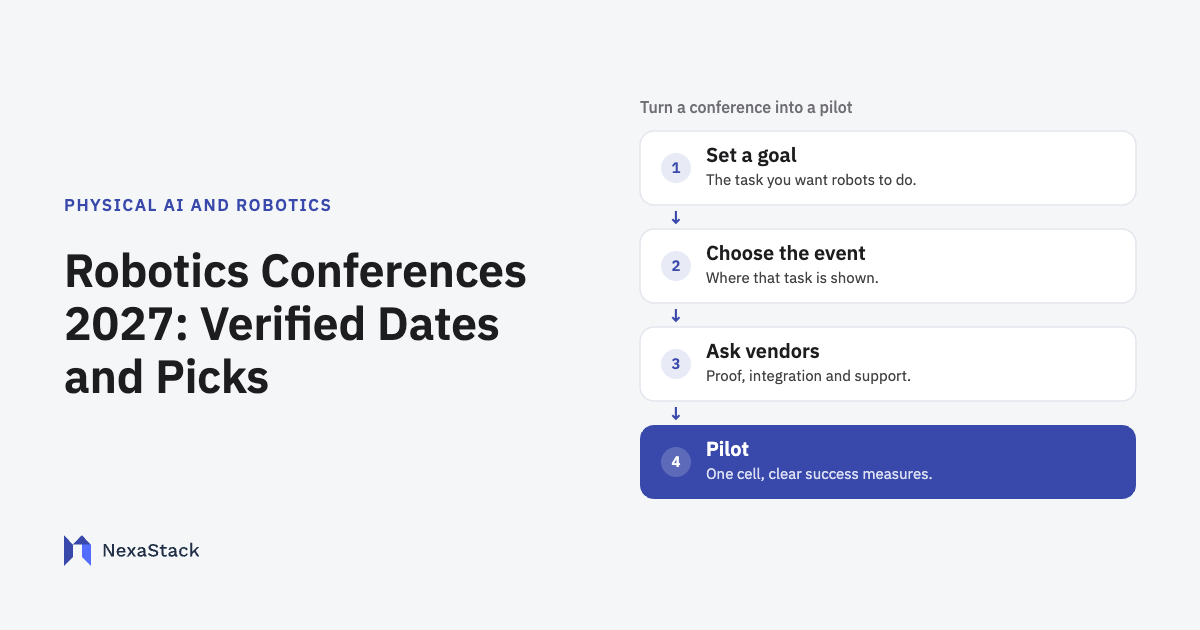
Robotics Conferences 2027: Verified Dates and Picks
Robotics conferences for 2026–2027 with dates verified on official sites: Automate, NVIDIA GTC and AWS re:Invent, plus how to turn an event into a ...
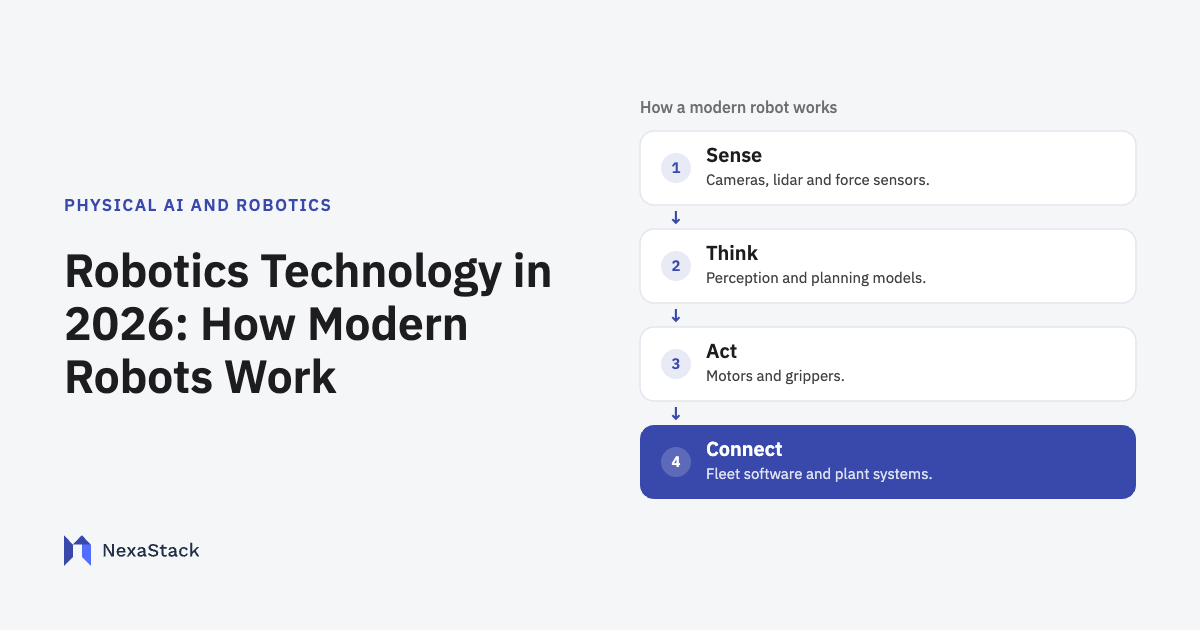
Robotics Technology in 2026: How Modern Robots Work
Robotics technology in 2026: how modern robots sense, think and act, the main robot types, the AI stack behind them, market data and how to start a ...
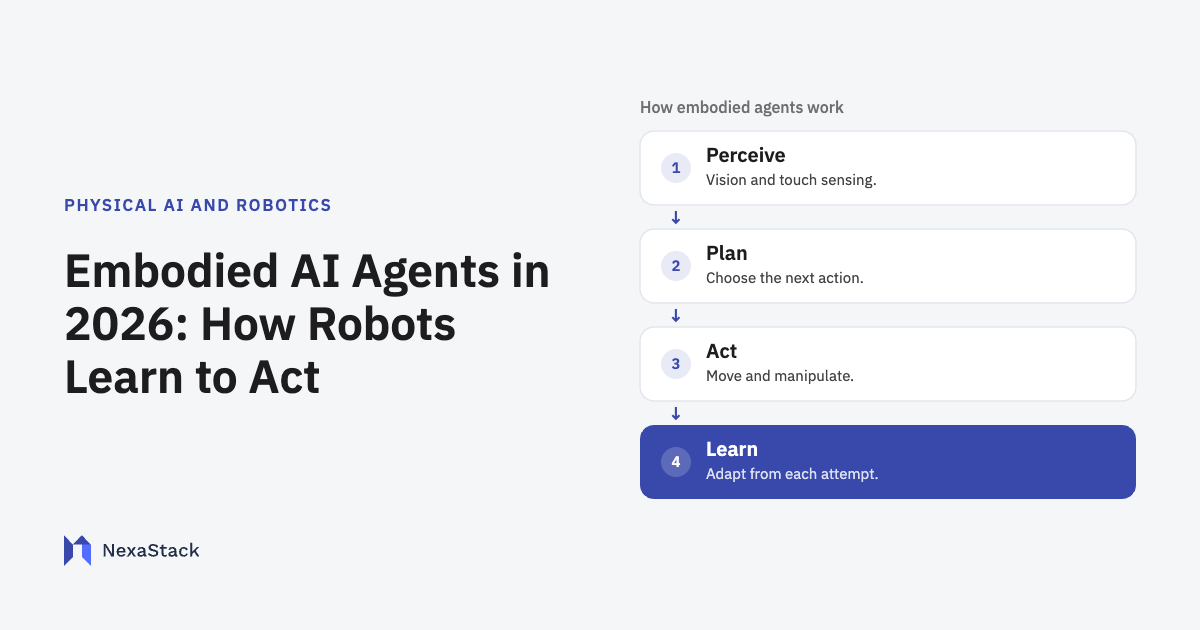
Embodied AI Agents in 2026: How Robots Learn to Act
Embodied AI agents in 2026: how VLA models, world models and simulation help robots perceive, reason and act, plus architecture and a 30-day pilot ...
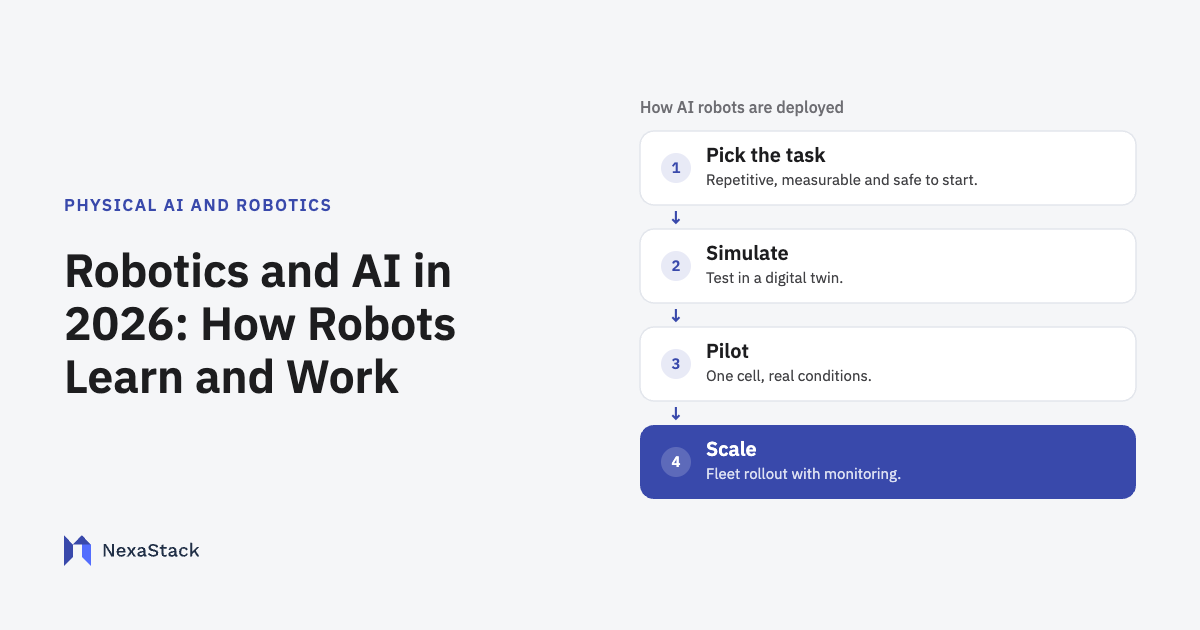
Robotics and AI in 2026: How Robots Learn and Work
How AI is changing robotics in 2026: robot foundation models, humanoids in factories, edge compute, and what it takes to run AI robots safely.

What Is Physical AI? AI Agents for the Real World (2026)
Physical AI lets AI agents sense, decide and act on machines, sites and assets. How it works, real use cases, and how to run it safely in production.

Physical AI Deployment Gap: From Demos to Deployment
Explore the Physical AI Deployment Gap and why robotics demos fail in production. Learn the architectural challenges blocking real-world deployment.
Physical AI vs Vision AI vs Robotics: Understanding the Differences
Physical AI vs Vision AI vs Robotics are often confused. You can learn how they differ and which capabilities your enterprise actually needs.
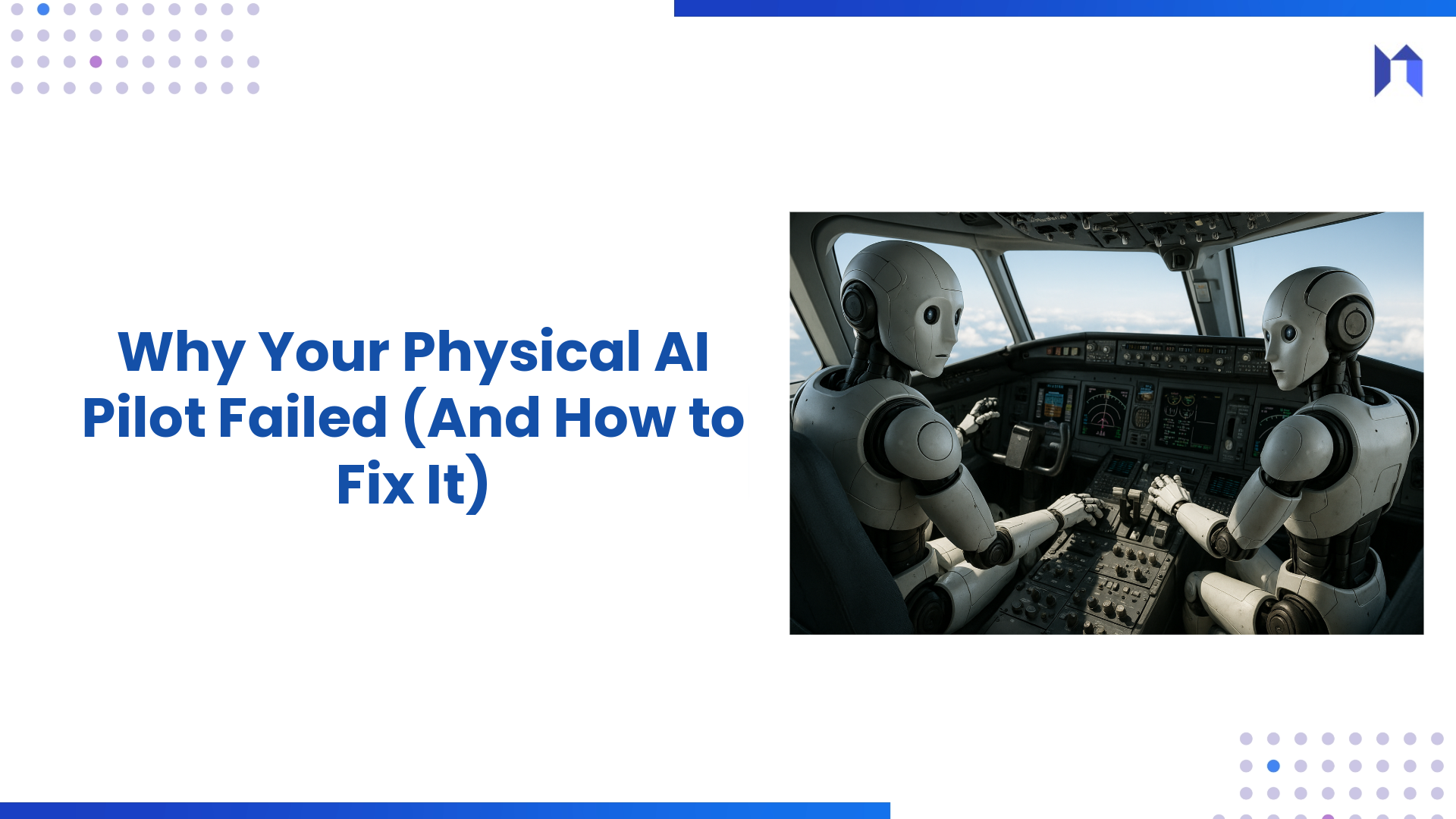
Why Your Physical AI Pilot Failed (And How to Fix It)
Most Physical AI pilot failed due to deployment gaps—learn the real causes and how to design pilots that scale successfully.
Reliability Engineering for Physical AI: Beyond Mean Success Rates
Explore reliability engineering for Physical AI, focusing on performance beyond mean success rates for optimal outcomes.

The Integration Problem: Why Physical AI Must Connect to Everything
Learn why the integration problem is crucial for Physical AI deployment and how it drives real-world success.